Hello! A week ago, I posted on Bluesky that the next issue of ROM would be about the fan translation of Segagaga, based on an interview I conducted with some of the folks who worked on it. As the public's joy at seeing this Dreamcast game translated after decades of failed attempts turned to very much not joy over its use of AI translation tools, I knew a straightforward how-it-got-made story wasn't going to be the right approach. So I started working towards a different sort of story that would talk about how the patch was made, why people reacted the way they did, and how the decision to use those tools manifested in the translation itself.
As you can probably tell from the headline, the rest of the newsletter you're reading right now is not about Segagaga.
Long story short, time wasn't on my side for this weekend, so a deeper dive into the Segagaga fan translation will have to wait until later in March. Sorry! But hopefully it'll be worth the wait. Given the increasing frequency with which AI is turning up in our day-to-day lives and sparking debates about quality and accuracy and morality and environmentalism and all that, I don't want to rush through the process of looking at the highest profile game fan work to use it so far.
So! This week is a bit of a lighter issue, with no big interview or breaking news, just some nice things happening around the emulation space. Enjoy! The horrors will be back soon enough.
(This issue does still actually contain some mild horrors, sorry).
The Big Two
1. DREAMM a little DREAMM of Yoda's Challenge Activity Center

One of my very favorite emulators, longtime MAME developer Aaron Giles' passion project DREAMM, has hit 4.0! What started out as an emulator specifically focused on the LucasArts SCUMM adventure games has since expanded to support more and more of the company's '80s, '90s and 2000s developed and published PC games, including more obscure ports to systems like the FM Towns. While many of these games it'd be possible to get working through DOSBox or the like, DREAMM makes the process of playing them so much smoother. And that's just the (very good) use case for a Windows PC: DREAMM also supports Linux and Mac, where most of these games were never playable in their day.
Also, the UI is really cute.
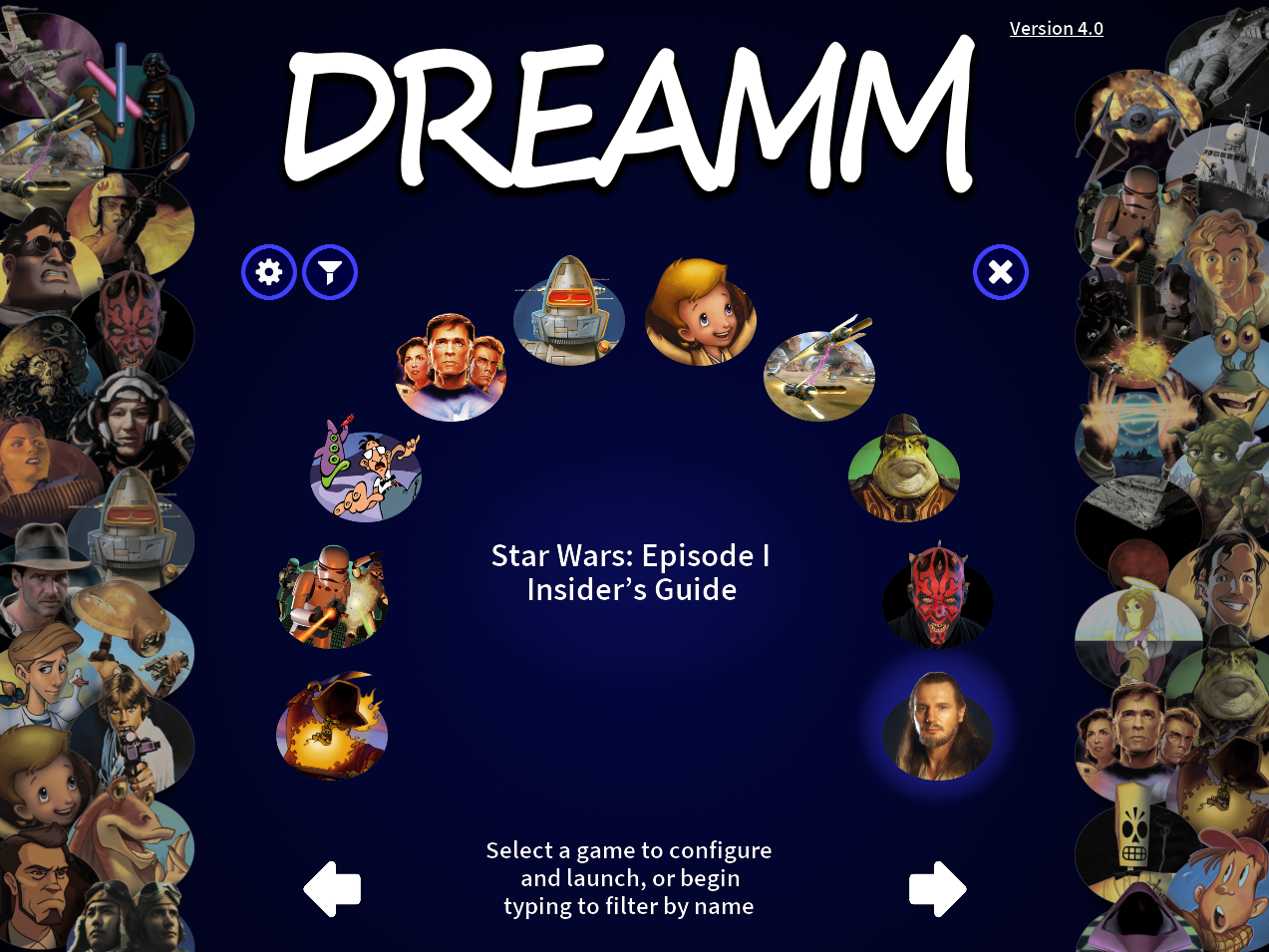
This big release includes support for a bunch of new games from the Lucas Learning series that I know you've been dying to play — but if for some reason you're not all about edutainment, it also now supports a bunch of Star Wars games "for adults" and, also, Willow's here.
The full new stuff list:
Six new late-90s Star Wars titles:
- Star Wars: X-Wing vs. TIE Fighter
- Star Wars: X-Wing Alliance
- Star Wars: Rebellion/Supremacy
- Star Wars: Rogue Squadron 3D
- Star Wars Episode I: Racer
- Star Wars Episode I: The Phantom Menace
All eight released Lucas Learning games:
- Star Wars: DroidWorks
- Star Wars Episode I: The Gungan Frontier
- Star Wars: Yoda's Challenge Activity Center
- Star Wars: Pit Droids
- Star Wars: Anakin's Speedway
- Star Wars: Early Learning Activity Center
- Star Wars Math: Jabba's Game Galaxy
- Star Wars: Jar Jar's Journey
Two new licensed games:
- Monopoly Star Wars
- Willow
Some of the big higlights of this release include experimental netplay support, auto-solving copy protection, "more flexible" controller mapping, loading games straight from .7z files, and default audio/video settings that will apply across games. Since the list of supported game has grown significantly, there's also now filtering to control which you see.
Aaron's FAQ is incredibly comprehensive in explaining what DREAMM can do and how to configure it, but it's also a remarkably easy to use emulator considering the complexity involved in emulating PC games from the DOS and Windows eras. Most of it is just drag-and-drop.
If you want to hear more about DREAMM 4.0, there's a two hour interview with Aaron going live hours after this newsletter arrives in your inbox — you can watch it here!
If I can stress one important thing for you, though, it's that DREAMM allows for easy play of two very important games: Indiana Jones and His Desktop Adventures and Yoda Stories.
I mean, just look at this. Can you imagine videogames getting any better?
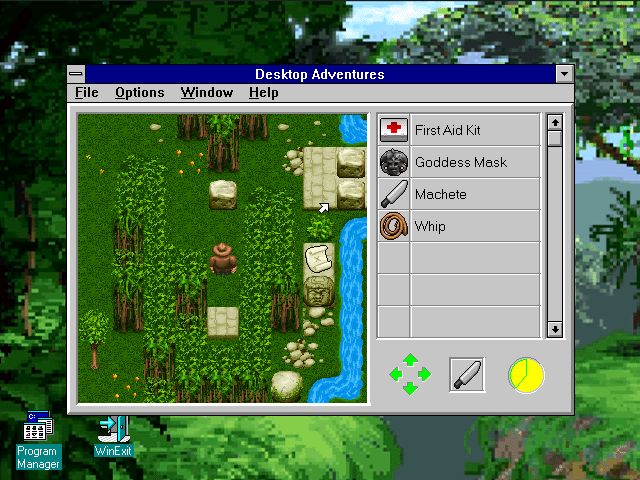
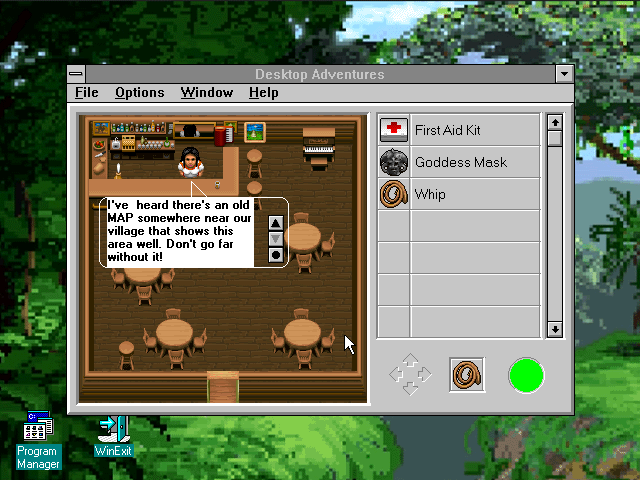
Images via CollectionChamber.blogspot.com
2. Get ready for the emulation handheld price increases (thanks AI!)

In February, AYN, the Chinese company behind the popular Thor handheld, posted the following on Discord:
"We were informed today by our DRAM and storage supplier that memory prices are expected to continue rising. Unfortunately, the broader storage price surge largely driven by sustained AI-related demand is still impacting the entire industry."
At the time, AYN said the price of the Thor would likely increase in April, and that "the final increase [would] depend on how much the component costs rise." But it didn't take that long: as of March 8, the Base Pro and Max models increased in price by $10, $30 and $40 respectively.
"Based on the information we've received, memory pricing pressure is expected to continue for approximately the next year," AYN posted alongside the new prices.
It would be a touch too dramatic to say that the era of cheap emulation handhelds is over — but the era of cheap emulation handhelds with generous helpings of memory probably is.
"The storage vendors are killing us," the CEO of Ayaneo apparently said (translated from Chinese) when announcing the $2,000+ Ayaneo Next 2.
 Michael Kan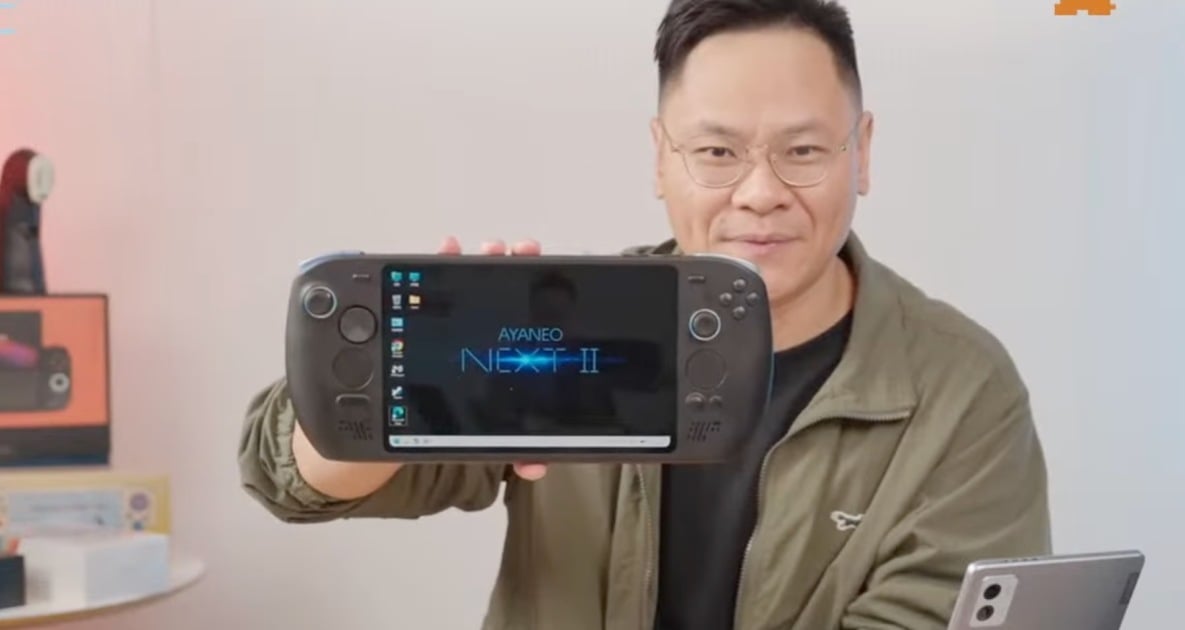
On Friday, Valve posted a 2025 year in review that said it "hope[d] to ship" its Steam Machine in 2026, but was having challenges with memory and storage shortages. Valve quickly updated the post to reaffirm that the hardware will ship this year, but it's clear the outlook isn't nearly as rosy as it was when the company first announced this tech just a few months earlier.

The Steam Deck OLED has been flickering in and out of stock in recent weeks, and I expect that's going to continue for the year to come as RAM remains squeezed by production lines focusing on data centers.
The Analogue Pocket, meanwhile, blames its price increase not on memory but on tariffs. It's $40 up from its original price.
 Damien McFerran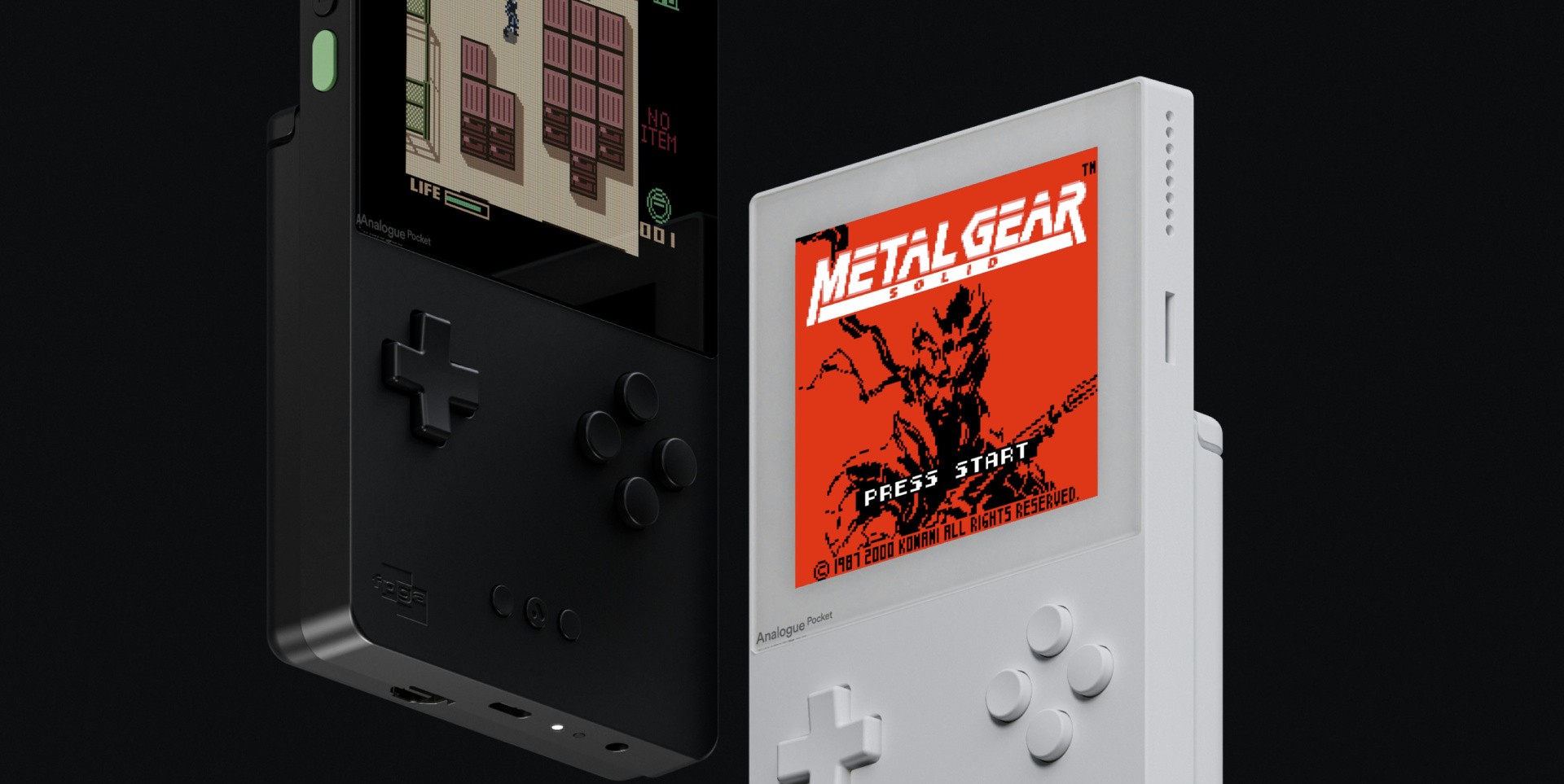
Retroid killed off the 12GB model of the Pocket 6, while bumping up the 8GB model a reasonable $15.
We're still wildly spoiled for choice when it comes to powerful portable game systems that can play decades' worth of console games via emulation, and right now price increases of $10 or even $30 aren't going to change that. But there's certainly a possibility that as these shortages stretch on, and the Trump administration erratically shits out new arbitrary tariffs, that the systems will keep getting a bit less affordable and a bit harder to obtain. Some of the smaller players may die off completely if memory supply is hard enough to come by. So if you really, really want one, I'd suggest getting it now.
Let's revisit this post in a year and see if I was being overly dramatic... or not nearly dramatic enough!
Patching In

Azahar comes to RetroArch – While it's still a pre-release alpha, once the next version of Azahar is public it will also exist as a libretro core, supporting Windows, Mac, Linux, Android and iOS. Version 2125 has a bunch of other fixes and improvements onboard, too, including a new integer scaling option, improved CPU usage with Artic Base, and solving an issue with shared Vulkan shader cache files.
PPPSSPP v1.2 adds portrait UI, multiplayer "relay" servers and more – The PSP emulator's first major update in some time delivers the goods, as promised. First up is the multiplayer feature, which seems like quite a big deal if you're playing PSP games online in the year of our dark lord 2026. "A new innovation in the PSP adhoc multiplayer space — they make it far easier to configure, since you no longer have to mess with opening ports in your firewall etc." writes developer Henrik Rydgård. "These are now automatically used for popular servers, and for other servers you can choose whether to try to use them or not." iOS now has screen rotation support, and the portrait UI is custom tailored instead of getting awkwardly squished. A new "smooth" audio feature "greatly reduces glitches when there are slowdowns in games," and the emulator supports the DualShock and DualSense on Windows out of the box. Hit this page for the full notes and game-specific fixes (like Outrun 2006 now being slowdown free!).
PCSX2 gets smarter about fonts – Fonts! I love fonts, and things to do with them. So I wasn't bored one bit reading these patch notes from a PCSX2 update that improves the emulator's handling of non-latin characters, and saves 25MB of space in the Windows version by not having to ship a font used specifically for emojis. Sometimes emulation isn't about the games at all!
Core Report

The MiSTer PS1 core studies up on CDs – Always nice to see the beloved PS1 core get better! Some updates/fixes from creator fpgazumspass and developer kuba-j include:
- Track savestate slot status and allow loading only valid states/slots
- Crime Crackers – freezes after intro, fixed in-game music
- Dave Mirra and Thrasher Presents Skate and Destroy – long stutters during gameplay
- MiruMiru PlayStation Vol.1 Disc 2 – broken graphics fixed (also fixes freezes on other MiruMiru demo discs)
- Parasite Eve II (NTSC-U) – freeze after Dryfield boss fight fixed
- Vigilante 8: 2nd Offense (NTSC-U) – black screen when selecting vehicle fixed
Taki Udon's MiSTer FPGA UI enters beta testing – The software Taki's been working on for the SuperStation is nearly ready! While it's not publicly available yet, it's currently in beta testing via Discord, which hopefully means a 1.0 release isn't too far off. It's going to be fascinating to see how widespread adoption ends up being as an alternative to the default MiSTer UI.
Console Mode is going into open beta testing for SuperStation/MiSTER Pi owners. If you are interested, head over to Discord. We have a special role and channel for feedback: discord.gg/t3ZywMBvh
— Taki Udon (@takiudon.bsky.social) 2026-03-03T09:40:56.120Z
Downloader 2.4 ain't faster, but it is easer – Speaking of software, the MiSTer's Downloader tool is back with a meaty update; it now supports files up to "a few GB" in size, updates to cores won't automatically delete the old ones if the download fails, and most importantly, configuring downloads is getting better with "Drop-in database files" that "Allow users to install new databases by just dropping files onto the SD. No more need to open and edit a file like hackers, just good old drag and drop."
Translation Station

The Simple 2000 Series' Tairyou Jigoku goes through the looking glass – This Alice-inspired PS2 horror game, part of the budget Simple Series line, had a Spanish translation a few years back, which has now gotten a "re-working" into English. What does that mean? I'm not exactly sure to be honest. The English looks okay in this playthrough, although you can tell the text spacing hasn't been adjusted for how it displayed Japanese. Still, a cool gaming curio to see in English, as highlighted in this video a couple years ago:
Lupin III: The Sage of Pyramid gets tomb raiding – As highlighted by the writers at Sega Saturn Shiro, this early 3D action game where you run around a pyramid as gangly Lupin bears a passing resemblance to Tomb Raider. As a lover of all (well, most) things Lupin, I'm happy to see this one in English, though also a bit wary — as Shiro highlights, its hacker/translator uses AI in their process (though they also highlight when using it is a bad idea!). Sticking to the awkward grammar of "Sage of Pyramid" in English is a bit of a red flag though. That's how it was written on the title screen in the Japanese version, but the point of a translation is to adjust such things appropriately in another language, yeah? As you can see from a full playthrough vid, Sage of Pyramid is pretty light on text/dialogue, so at least you're not losing out on the essence of the game if the translation is spotty in places.
Genesis tactics game Vixen 357 is getting an official English release – Well this is very cool! Retro publisher Shinyuden is putting out a physical edition of this Langrisser-alike, which has some very nice looking anime portraits in it. An official English release of a '90s mecha strategy game in 2026 is a treat.
Valkyria Chronicles 3 translated, but more – A game people were famously excited to see get a fan translation more than a decade ago, but it wasn't quite finished. This project fully retranslates the game, plus hits some stuff that was never done in the original fan effort, like the DLC and in-game encyclopedia and newspapers. Check out this list for everything the new patch includes! "The translation itself is pretty much entirely by me alone. I guess I should note in 2026 that this is a 'manual' translation, not AIsloption," the creator wrote on Reddit.
A Doraemon adventure-platformer? Sure, why not – I assume without looking it up that there are approximately one million Doraemon games, as there are one million Doraemon movies, and this one looks to mostly be walking around town talking to people in between platforming stages. But if you dig the android cat, here you go! (Okay I looked it up and there are SO MANY)
Good pixels

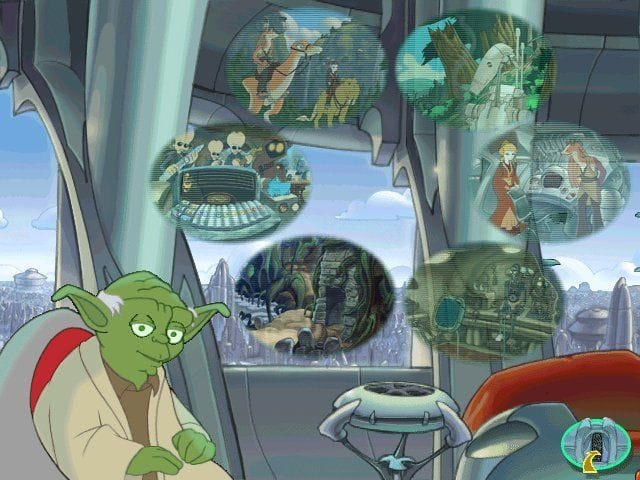
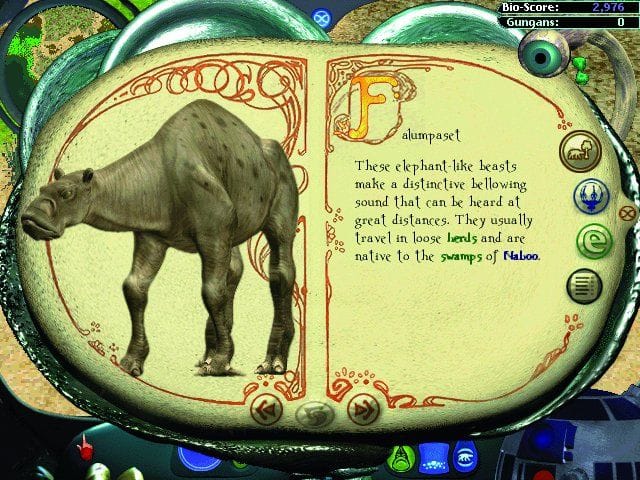
And now, for a smattering of amusing screenshots from the Lucas Learning line.
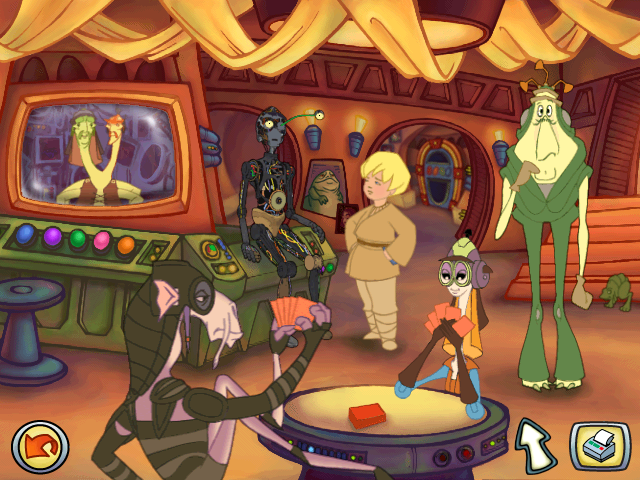
Images via Mobygames