To paraphrase Charles Dickens of Assassin's Creed Syndicate fame:
The times suck ass.
At no point in my memory has it felt more absurd to try to ignore the politics of my country, the crises of communities just trying to go about their lives, and the hatred of those who feel they have the right to bully, belittle, and kill with impunity. I'm not going to dwell on the murders the American government has not just committed in the last week but actively championed as a good thing. Partially because this is a newsletter about old videogames, but more because even thinking about trying to capture 1% of the truly awful state of it all in words makes me want to stick my head in the oven.
What solace there is to find comes from the photos and stories of immense kindness and unity and braveness of people who do not want to be on the front lines of a national awakening to fascism, but have chosen to face it head on. Hate Has to Scatter When Minneapolis Arises; Fascists Are Pathetic; JD Vance Is A Hog That’ll Eat Any Slop; There is no such thing as other people’s children.
But I am so inspired by the team at MinnMax, who have given thousands of dollars to support their neighbors and inspired their viewers to donate more than $100,000 more. And while this is tangential and trivial next to the what's happening on our streets, I just want to put it in the clearest possible terms, here and now, that I will never cover Palmer Luckey's ModRetro in this newsletter. I don't think this is a position that requires much explanation, but there's the drone warfare; there's the Trumpism; there's being the kind of person who would think this kind of thing.
I do not care if the people who work at ModRetro "love games." Sorry! So do a billion other people who don't take a paycheck from that guy.
Maybe I'm dwelling a bit. But this issue of ROM was going to be a bit different than usual even before I sat down to write something about games and all that came tumbling out. We're skipping the usual format for a big, beefy interview with Taki Udon, going over the design of his SuperStation One, the PlayStation-inspired MiSTer FPGA console he unveiled last January and began shipping just before the end of 2025.
We're going deep on this one: Original design, iteration, manufacturing logistics, software challenges, burnout, analog video, tariffs and part shortage nightmares. The one topic not included here is the add-on SuperDock, because this issue is already long as hell. But Taki and I talked about the Dock, and the work that went into proving the MiSTer FPGA could play games straight from a disc drive; look out for that last bit of the interview next issue.
The Big One: The Saga of the SuperStation One

Retro Remaker founder Taki Udon and I talked about his last year spent building an FPGA console for almost two hours, and I've presented the bulk of that conversation here as a straight Q&A, condensed and rearranged for clarity. If you've been eagerly anticipating the console, I hope you enjoy.
Shipping the SuperStation
You posted a video around the end of December reflecting on 2025, saying it was a hard year. You worked through burnout, and then kept working. How are you feeling right this moment?
I feel very relieved.
The first day that I was able to ship something it was a huge weight off my chest, because before that, there were points where it seemed super bleak, especially for some R&D challenges. In those snapshots it seems like there are things that are impossible to fix. But I've already spent so much time here, failure can't be an option.
It took us a lot of time to get those first units to ship. We had them in the office for like a month, doing a lot of in-depth analysis, debugging, figuring out what's going wrong, what's going right. When we finally managed to get that first batch into the state that they needed to be in, it's hard to explain the feeling that I had. It was a really, really difficult product to do. Just the product itself — not accounting for all the supply chain nonsense.
There are components I'm supposed to get next week that I bought at the beginning of last year, that were supposed to be delivered like four months ago. A lot of things are money-related: if I had enough money to fully pay for all the SS1 orders without using customer money from day one, I would be chilling the entire time. It would be so smooth. But if this fails, the company doesn't exist anymore. That's in my mind everyday.
Where are you at right now, as of January 17?
We're almost done with clear blue, and then we're going to be doing a mixture of black and gray. We're clearing the orders that only have SuperStation, and then we need to do SuperStation and a dock. Then we move on to batch two, and then batch three. It's very challenging.
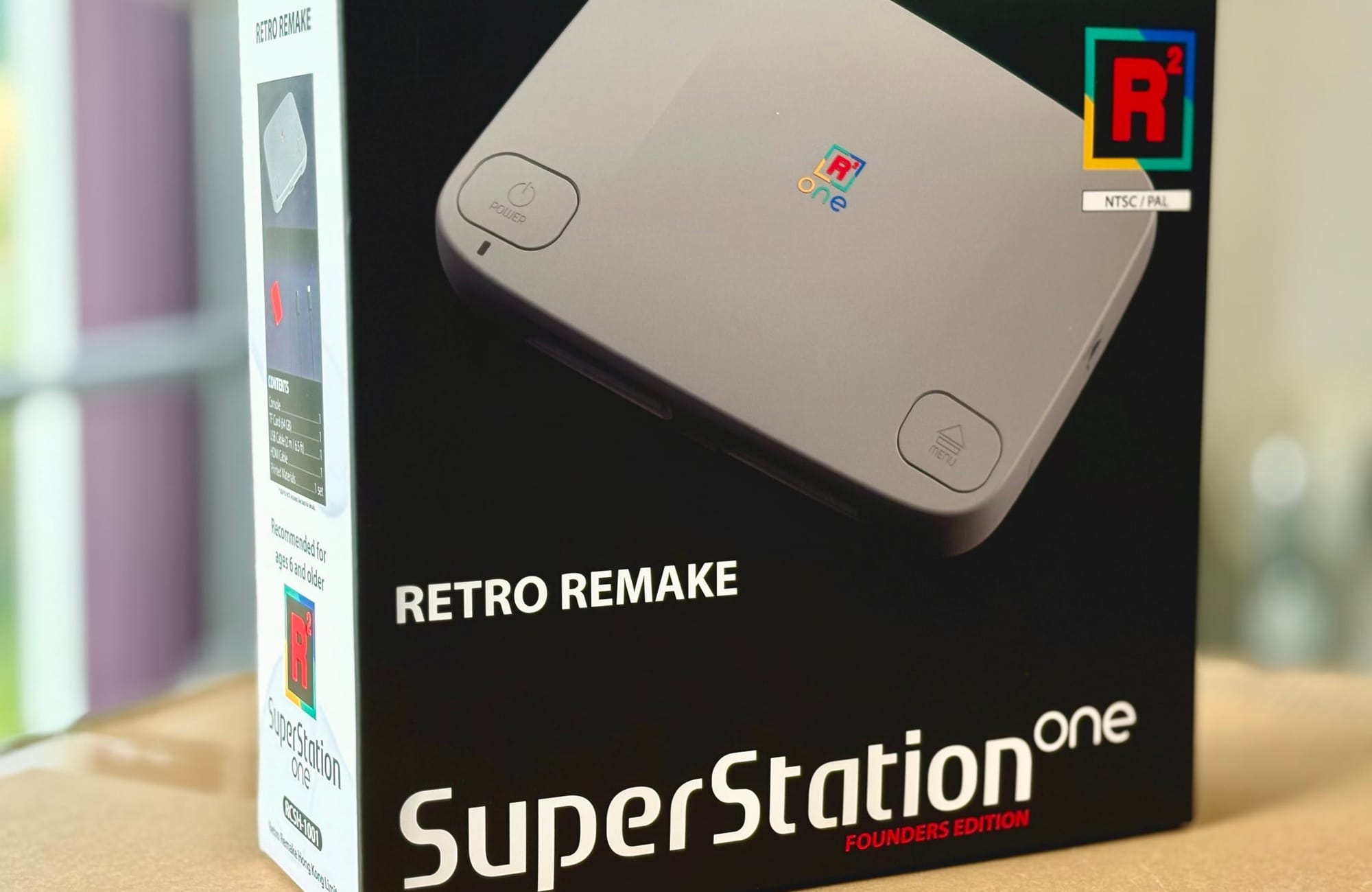
And when you say challenging, you mean just the logistics of getting all these units made, packaged, and shipped?
Yeah. Yeah yeah yeah. We launched [pre-orders] in January 2025, so it's basically at the one year mark. I knew ... if we have a lot of [orders] it's gonna be a challenge, but it's a nice challenge to have. If it's not a lot of units to do then that's also nice, because it'd be very easy to get through them all. I think I went to bed that night knowing that because the Founder's Editions are all signed, I'm going to be signing my name for weeks. It's been looming over my head. The size the company was in January [2025] needed to grow, a lot, to be able to do this, because we don't outsource anything.
A lot of other companies, especially that are in the same market as us, outsource a lot of stuff: assembly, testing. Some of them even outsource logistics, the actual shipping of the product and are mainly just an R&D company. We don't do that. For the very first shipment of MiSTER Pi, we did the R&D, then we sent it out to be made. When the individual parts were fabricated, that would be sent to an assembly company [to] assemble the Mega kit or Turbo kit, and then they would do QA on it based on a document that we gave them. Then they would give it back to us, the idea being that we just need to put it in a box. It should be good to go. We did secondary QA as a sanity check, because I'm very nervous about sending out anything that I have not seen go through a process.
If we live in the same city and there's a problem with your order, it's very easy for me to fix that. But we are on the other side of the world. And it's difficult to get something out of China, and it's also difficult to get it back in, especially when you have to prove that it's yours to not have to pay ransom on an import just to do an RMA. Once we did some secondary checks on some of the stuff from that company, it was garbage. They weren't checking USB connectivity very well... If USB doesn't work on MiSTER Pi you basically can't do anything. So I was weighing the cost of how much we were paying for them to assemble it, which wasn't cheap. And then the QA that they weren't doing, they were just basically, like, put a sticker on it, and then say it's QA. The sticker is meaningless, because there's nothing that backs it up. So after that, I was like, well, we're a company now that is just going to assemble all the stuff and we're going to QA it inside our office.
The reality of making that choice was that we had a very, very, very small office with very few places to walk around and boxes and pallets stacked to the ceiling. We had loft ceilings, so you can imagine pallets that are double the size of a person and every small space in the office is somebody working on testing or packing.
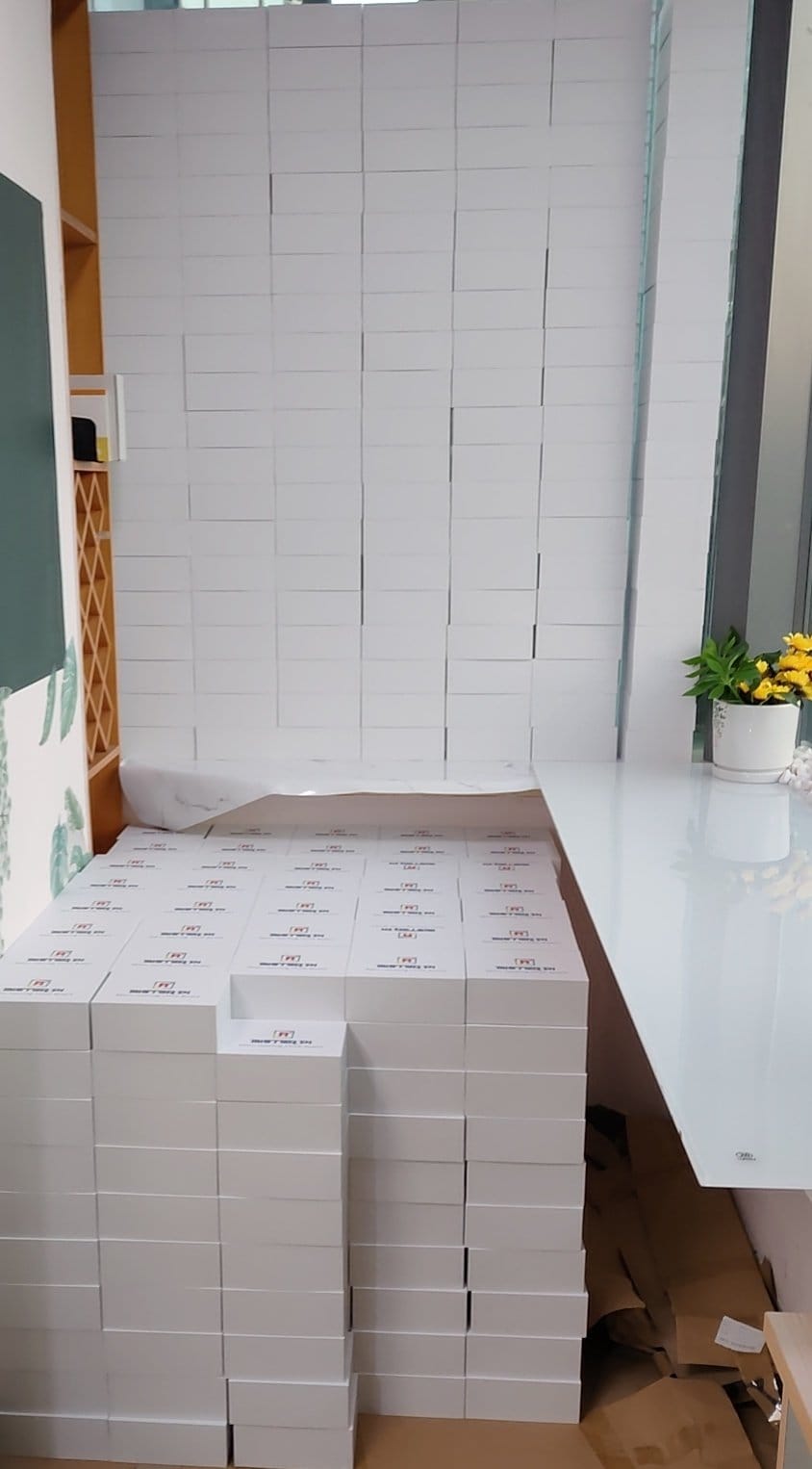
When we launched [pre-orders for] SuperStation we were still in that old office. And I knew how much of a problem it was to be able to have space to work on MiSTER Pi. So I'm just thinking, there's no way this space is gonna work for SuperStation at all. We had fully outgrown that place, and then some. The team that I had at that time could process a certain volume, and that team could not do SuperStation. The company grew 3x since January [2025], and we still are in the full swing of ramping up to increase the daily production amount. With the new people that are still joining from the time we're having this conversation, [Retro Remake will be] 4x the size.
It would be easier if I did outsource stuff, but it's such a specific kind of product that needs to be tested in a certain way. Every single thing on the device needs to be tested and it does so much more than MiSTER Pi does just out of the box. So the testing requirements are much higher.
Designing a friendlier MiSTer UI
Where are you with the "Console Mode" UI? Are you calling it an OS?
No no no. A lot of people do small changes to stuff and name it like it's a brand new OS, and that just makes me cringe. There are handhelds where they've changed the background and color and are like "this is the new OS!" This is not an OS. This is an application that runs on top of MiSTer. It runs on stock MiSTer. It can run on a modified MiSTer to do auto-booting. There are all kinds of different options for the user, and you'll have the freedom to choose which wa you want to go.
You want to use stock and load into this thing manually, you can do that.
If you want to use modified and never have to go into the MiSTer menu, you can boot into ours. If you want to be able to control the menu with a PS1 controller, there's an option for that to. It's à la carte.
We are mostly done. A lot of the stuff we're doing now is around the experience. We've had a high friction way of using this UI for awhile now, which is loading it from the stock interface every time you want to use it.
I spent an absurd amount of time to make sure our stuff is compatible with the the official [MiSTer] release. It's not something other companies would do — they'd just fork the entire thing and say "this is SuperStation OS, it's not MiSTer FPGA anymore, it's SuperStation OS and this is now you experience it. All of our hardware is verified to work in just this way." But then we would fork the community, which I didn't want to do.
After we had the high friction way working, we started working on the auto-boot way, which has been a challenge but seems done now. For the last couple weeks we've been doing a lot of work to make loading things better and making things function in the background. You can auto boot into our UI and inside the UI you have the option to go back to not auto-booting. I don't believe many people will go back to the default UI.
There are plenty of options and I don't know which ones people are going to go towards, so I'm just making all of them available. Once I have feedback from customers, then we know what people really care about. I now know why companies do closed source stuff, and why people don't try to do what we did. There are very minute details about MiSTER Pi and the DE-10 Nano that, when they're done in this consolized way... like, 'oh, if you don't have this thing on your board, then this thing that you don't want to happen is going to happen. They're not related at all and should have no connection, but some obscure part of the software makes them connected and nobody knew about it because it's always been there. How do we work around that?'
There's so many of those annoying things.
So you're still planning to release the Console UI as open source once you're done with it?
Yeah, of course.
Why getting the SuperStation hardware just right took a whole year
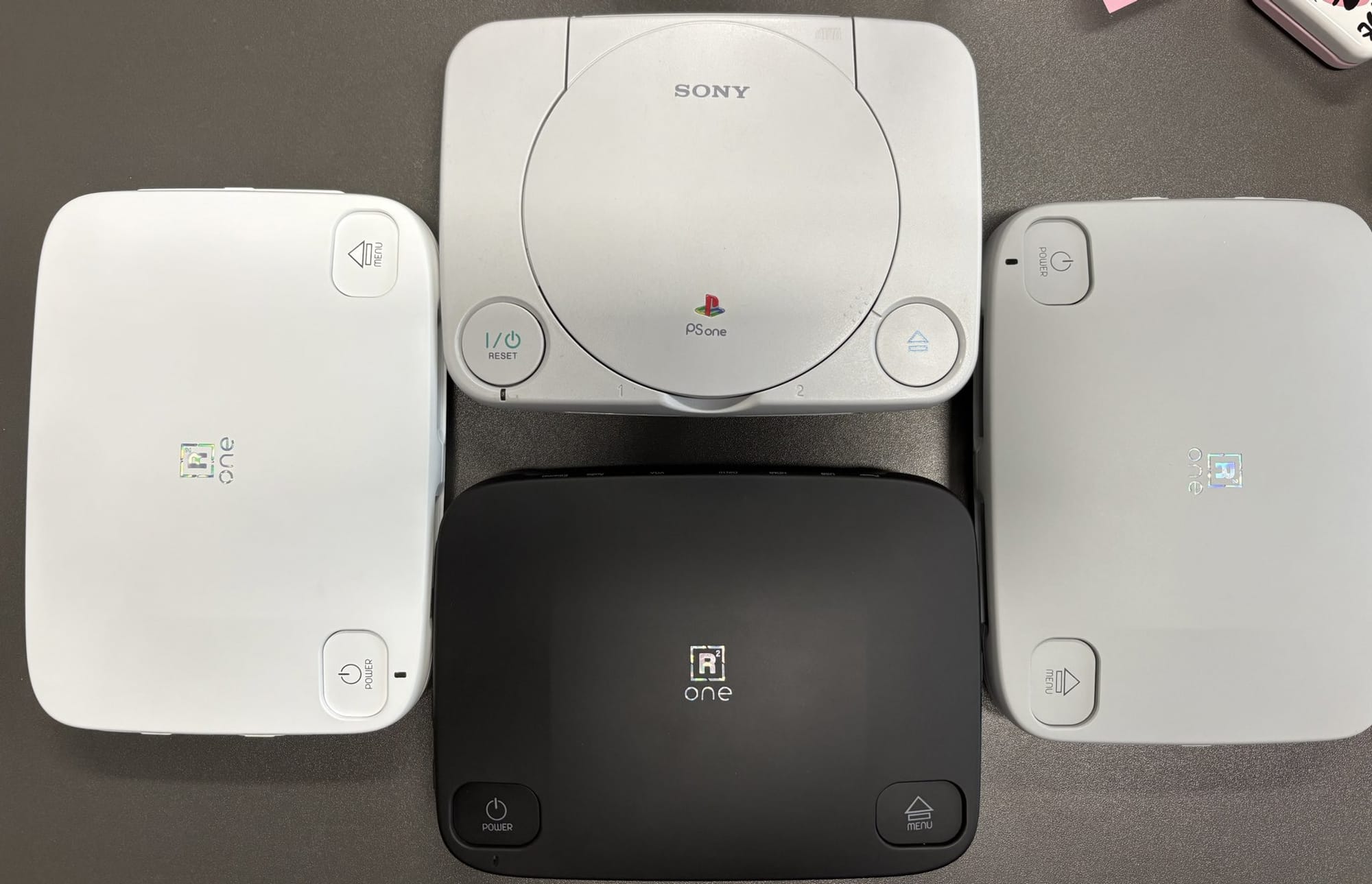
Can you walk me through the design and iteration process?
This product was in the back of my mind at the previous company I worked at. If I had a lower workload at that time, this would have been an emulation console with an ARM processor. It would not have been FPGA.
I just love the design of the PSone. It looks modern even today.... it was very forward-thinking. It could be a product today and it wouldn't look out of place. It's a timeless design and I really wanted to do a new version of it. At that time I wanted to do a very powerful ARM system with a Snapdragon chip or something like that, but my workload was too high. Retro Remake started [with] MiSTER Pi, but my real goal is not to just make development boards. I want to make products.
"In my mind, I'm like, 'This is a kickass idea. This is the thing.'"
I like building consumer products. And now I think this could make a great FPGA console. At that time I wasn't thinking 'it's going to be a great PS1.' I was like, 'it's going to be a great version of MiSTer, but in this design.' So one day from the morning to the end of the night, I was in my house, and I planned out what my what my product stack would be like for MiSTer. I drew a high-end product which I was calling Flagship. Then I drew a modified version of the PSone.
I put that this one was going to have an MSRP of $100, and would have active and passive cooling. It would have digital and analog out. It would have VGA component and composite, which we have. It would have three USB ports on the back, which we originally did, but then we didn't have space because I kept adding stuff. It would have an actual power button, because MiSTER Pi doesn't have one. It would have two SNAC controller ports for PS1. And then it would have a 5V PSU to make sure that everybody has enough power. It's shifted a lot from that point.
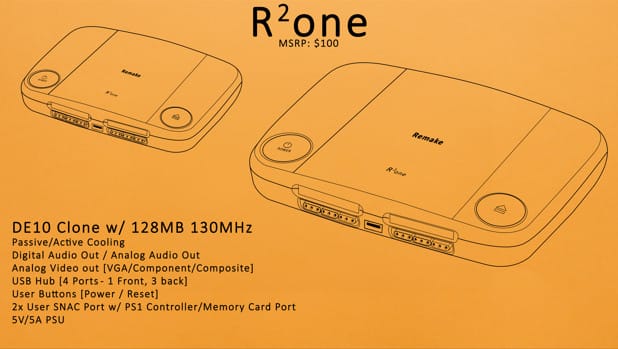
After I drew this and did the pitch, I knew that I wanted it. The other co-founder actually liked the flagship more than this. If you grew up at that time and you used this thing, you have fondness for this design. But there are some products that didn't reach China in the same way. So they don't have any connection to it at all. Sometimes it causes companies [run by people who] grew up here to design products that don't actually resonate with the rest of the world....
[But] I said, 'This is the console that everybody will get. This is the price point. This is the design.' He knew that it was a design that I had liked for a long time. He approved it, but didn't get [excited] like, 'oh, this is a great idea' or anything like that. But in my mind, I'm like, 'This is a kickass idea. This is the thing.'
What did you really want SuperStation to be able to do, that you can't do on a regular MiSTer board?
The main thing that I wanted this to do was have the various outputs so people could still use CRTs or PC monitors. The MiSTer doesn't include that [without adapter boards]. There are already FPGA companies that just give you HDMI out, and I don't want to do that. I want to be different. I want to have access to these things without having to make people purchase some DAC that doesn't get released.
I didn't know how difficult it would be to get this thing to output the signal at the [quality] that I wanted it to be. When we did MiSTER Pi, it... wasn't intended to be reference quality analog video. So when I would test it, I'd be like, 'Oh, this looks good.' But I didn't know there's an esoteric way of being able to test it to prove that it's not actually the best. Once I knew that this test exists, I'm like, 'I should be able to do that. It's if it can be done, then I should be able to do it.'
I didn't know how difficult it is. When I worked at my other company we would get into challenges and I'd be like, 'people are in space. What we are doing is not difficult. We are making a gaming handheld.' So we're four stars on MiSTER Pi, and there's a fifth star. And I know exactly what I need to do to get the fifth star. And I know that based on this data, somebody has a fifth star. I know enough now that I just want five stars.
Behind the scenes pic.twitter.com/cNqju6f3Hw
— Taki Udon (@TakiUdon_) December 22, 2025
That was eight months of the R&D right there. If I didn't get that in my head, then SuperStation has already completely shipped by now. We have just iterated [and iterated] on boards to solve that.
We dropped the [third] USB port very, very early on because there wasn't enough room in the back... The audio output is now digital and analog together, but at that time it was just analog. On the left side I had a connector for SPDIF, which is digital audio, but when I started doing testing in earnest of the video signals, I was like, 'S-Video is really great for what it is.' It is almost as good as RGB.
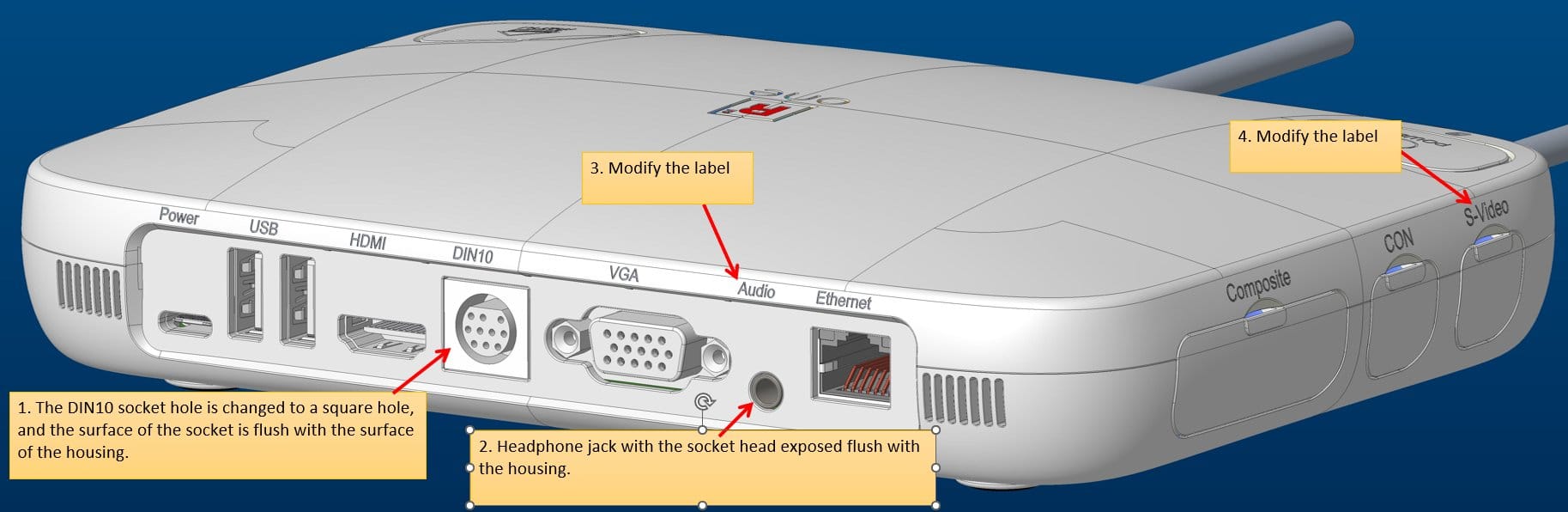
In some cases I think you can get a really good S-Video monitor that looks better than an RGB one, and they're very cheap. They're cheaper because people think 'RGB monitor, I need to get that one.' But S-Video is awesome. Our original plan was to have S-Video in the SuperDock, but after I tested it, I wanted to have it in the main console. That change added so much complexity to the motherboard design — another video signal that you need to have output at the same time as everything else.
So I [combined] the digital audio into the analog audio, and then I have a connector for S-Video now on the side. Those are the only things that have changed in the outward appearance from launch to now.
I also had it in my mind that I don't like the way that MiSTer handles user settings and stuff with .inis. I knew if I have all of these outputs, it's going to be very complicated for somebody to be like, 'I want to use RGB out, but I'm in America so I need component video output, and then I'm moving my SuperStation somewhere else and I need to use S-Video.' I didn't want them to have to always change settings. If we can just make them all output at the same time, then it's plug and play, which nobody has.
We have the only [FPGA system] right now that's shipped, that's fully plug and play with one setting. I know after we did this, other people have been talking about how they're going to do it.
We started with one board with all the outputs, then we went from that board to making everything output at the same time, which was very difficult to do. We'd find out 'oh we changed this component on this version and it impacts this signal, but when we fix that this other one becomes worse.' It was very annoying and took the entire [year] just to fix that. It took three motherboard revisions to get to the signals all outputting at the same time and they can all be reference quality.
The risks — and costs — of launching SuperStation
What did you have to do to achieve that "five star" video quality? And what were the costs involved with each revision of the board?
1.0 did have some things wrong with the analog signal, but it was summertime, which was in the [intended] shipping window. I would make 100 of the board, and if it worked fully, then we would start shipping whatever's left from the 100.
"Then we test, and oh, we found some critical failure, so all of the 100 are wasted"
Doing the 100, if I soldered all of them, that would be an insane waste of money: You're talking about five digits of money wasted. But I would make the 100, which is still a lot of money, probably a couple thousand [USD], and then I would do small SMT on, like, six of them. That can cost a couple thousand.
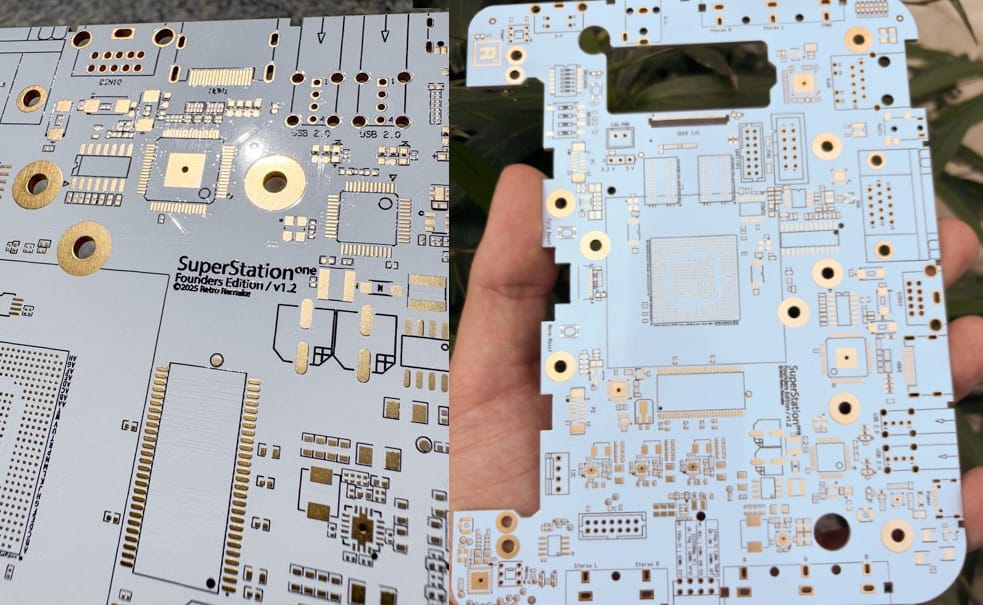
Then we test, and oh, we found some critical failure, so all of the 100 are wasted. That loss is from [revisions] 1.0, 1.1, and 1.2. Like $40,000 in loss — not including time, because I paid engineers to work. The company was operating during that time. It's kind of been in a holding pattern, waiting for the day to start just being a SuperStation company. So the longer that this [iteration phase] drags out, the costs build up.
SuperStation was meant to be fully shipped by last month, and I could have made my standards lower, and it would have worked. And not lower as in bad — from what I know now MiSTER Pi is a four star video signal analog product and you, as a person, would not be able to distinguish between a four star and a five star. You can't see the difference. But I had already committed. I wanted to do something better than what I had already done, and this is all my own team's work... We engineered all of the stuff. It should be able to beat what one guy working on [MiSTER] by himself did — I'm talking about the creator of the whole software and everything, great guy, but he did the whole thing by himself, so if he by himself can get four stars and I have an entire company, I should be able to do five stars.
If I had just accepted four stars, we would have shipped a lot sooner, because I think [PCB revisions] 1.1 to 1.2 and then 1.2 to 1.2.1, those are all just to get the five stars.
"I wanted to do something better than what I had already done, and this is all my own team's work"
Before last January, I had never directly used an oscilloscope for anything. But I have seen them used on other projects that I've worked on. For Super 5 OLED, we had to use an oscilloscope for some panel timings to make sure that when we were sending the data the screen was receiving at the same time. For SuperStation... I committed myself to learning what the standard was for all of the different outputs and how to prove that my board is meeting those standards or not. I mostly self-taught. I had help from another person who put together this testing report — I bought the same oscilloscope that he did and then I would say, 'I'm looking at this, does this look normal?' Now I have thousands of hours on doing oscilloscope stuff. I know it like the back of my hand.
I want to know when people get this board, it is not going to fail them. It should never fail them. Everything should just work perfectly, because I want everybody to have a great time when they buy this. It's not supposed to be the same kind of product — if MiSTER Pi fails, there are so many module boards, you could just replace something. This is not like that. It's a different challenge, and a lot of it is just learning on the job. You have no choice but to learn this stuff every day.
How did you have the money to be able to afford to produce the molds for manufacturing, and take the hit on hundreds of PCBs at a time that didn't pan out?
Well, I don't pay myself, which saves the company a lot of money. It adds up. Free labor from me for years is actually a huge line item to save on.
Because I do this six days a week for more than 12 hours most days. The thought process behind not paying myself in this early stage is if I pay myself, I will be taxed on the money that I pay myself, and if I need to re-inject money into the company, then I'm paying with after-tax money, which is a huge slap in the face. So I would much rather not pay myself and have the ability to use money that would have gone towards my salary pre-tax to do things that the company needs. So that is more than two years of not taking a salary, which is a huge amount of money.
There are days where I work 20 hours in office, and there are days that I work on holiday. So if I paid myself, holiday pay is like three times base salary, overtime during the week is like 1.5, weekends is two. If you multiply all that out, you could pay for most of Superstation's R&D just from that.
MiSTER Pi was $99 when we were first selling it. The cost to us was actually very close to $99. So we got a couple dollars, and that couple dollars went back into the company and never came out. I never paid any dividends to myself or the other other owner of the company.
We injected our own money in to begin with, and then just injected the money that the company was making back into the company to have more runway. Those things all add up to being able to do what we did. We did almost all of SuperStation's R&D without using any money that people paid us for SuperStation.
I did some things that were kind of naive that I, in hindsight, should not have done. I had the view that if I have not shipped somebody's product, then I should not benefit from the money that they are giving me.
"I always have the thought in my head that it's possible for this thing to fail. And if I fail, then I need to refund everybody that bought it"
There are people that bought Super 5 in September of 2024 that bought a specific SKU that only just shipped now. So if you think about it, they gave me a no-interest loan for more than a year. If I'd done something with that money, then my benefit is more than what they gave me. Even just sitting in a bank account, I would have made money from their money. I had the belief that I should never be able to benefit from anything being delayed, so I shouldn't be able to get any appreciated asset from a customer because of my delay. So I kept all of the money for customer purchases outside of my ability to use for any company purchase.
It sat in a different bank account that doesn't get any interest, that I can't benefit from at all. So that bank could use that money and do whatever they wanted with it.
For SuperStation, I did the same thing: the money just sat there. If I knew then what I know today, I would not have done that. There are people who bougth Super 5 OLED that paid $18 to ship to the US. That same package today is $28. If I'd put the money in a CD for over a year, I could have covered that cost. There'd be no expense to them, no expense to me. I didn't do that, so the expense is just to me.
If I was rich I wouldn't care about any of this, and I compete with people that are rich. They don't need to worry about 'how can I get an extra 1% to cover shipping inflation and not lose my shirt.' They're either millionaires or billionaires, so it doesn't matter to them.
I always have the thought in my head that it's possible for this thing to fail. And if I fail, then I need to refund everybody that bought it, so I need to have room for that to be possible. Which means I can't spend X amount of money for this thing until I'm absolutely confident that it cannot fail. At all. Bringing [mass production] online in a risk-averse way is something that I only have to do because of the company size... I operate every day as if I have no money at all.
The impact of AI and manufacturing constraints on small companies like Retro Remake
We've been dancing around the corners of this topic, but how much is inflation changing things in production right now? The AI frenzy, tariffs, cost of RAM and other components?
Going by the prices of components that we were paying for on MiSTER Pi that are shared on SuperStation, there are some things that have doubled. Some have tripled. SD cards have tripled, probably quadrupled by now. RAM that we use, either we can't get them because the companies can't afford more production capacity, or the prices have doubled. Flash chips have doubled. It all adds up. If I make a SuperStation from the ground up, today, it costs maybe $15-20 more than [in January 2025].
With all the things that have changed for Super 5 OLED HDMI, I lose money for every one that I ship out, but that's just the nature of how long it's been since people bought it and so much R&D went into it. But it's not their fault these things happened. That's my stubbornness to finish it [rathe than] refunding orders.
There are components that if I want to buy them today, I have to wait half a year to get them, so there are certain other FPGA products that are basically done, which I don't have the components to be able to release. We are a hardware company, so we survive on low margins and we have to release new stuff. We don't sell software.
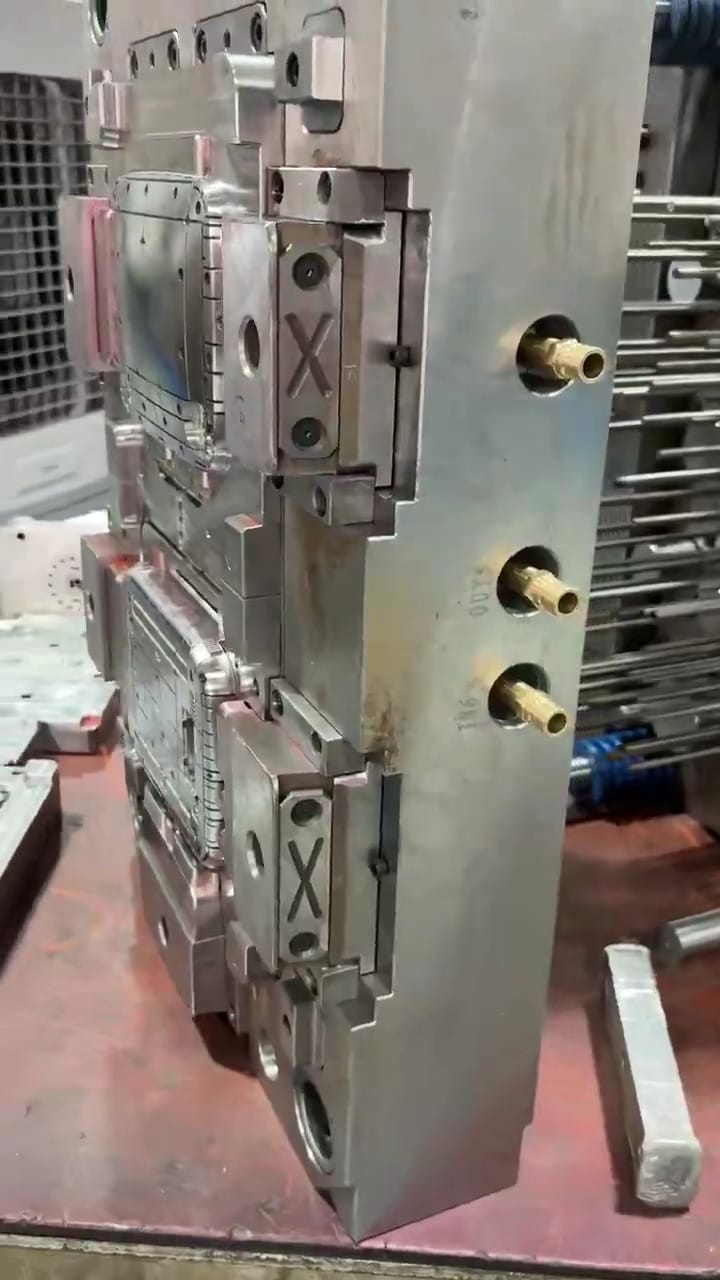
It seems like it wouldn't be expensive given how small this is, but I spent a small fortune making this user-replaceable SS1 controller connector. Here's the mass production version: https://t.co/ZY6PR6aRYq pic.twitter.com/gRUHLJjJAP
— Taki Udon (@TakiUdon_) September 28, 2025
Those are all recent changes. The biggest thing that hit us is, we sold SuperStation last January, and I was very happy because I believed in this thing, and a lot of people believed in it too, and that meant I could keep doing what I love. Then a month later, a huge part of my customer base had these huge, 100,000% tariffs on everything I'm making, and they already bought it. It's just, like, fuck.
"If I [had ended up] shipping in September, I would've had to refund everybody that bought it in America"
Can I produce in another country? Is it worth it? Can I move everything to Mexico? Another FPGA company's stuff is all made in Mexico, so I was evaluating and seriously considering it, or doing logistics in the US. But it's difficult. I think now the tariffs are like 30%, but If I [had ended up] shipping in September, I would've had to refund everybody that bought it in America. It was a super stressful time to go through, and it's still more expensive to do business [with the US] than it was before all of this, even outside of tariffs. There are all these shipping fees, and even budget shipping options have special shipping channels with administrative fees. It's insane how fast stuff can explode.
Looking ahead to the future of the AI-driven manufacturing craziness, how are you feeling? Optimistic? Pessimistic?
It's not like parts don't exist or can't eventually exist — it's just that things are too expensive, that I morally don't feel comfortable selling something for more than I know or think it's worth. I have a problem with that. So I would just not do it.
There was a project I was planning to do a few years ago, and let's say the price was supposed to be $20, because I wanted everybody in the world to be able to afford it. That product can't be done for that price now, which means it can't be afforded by everybody — which means it can't exist right now. If people that I want to be able to afford it can't afford it, that means they can't participate, which is the hwole purpose of the product.
It would be less annoying if there were more factories that can produce the kinds of chips that the world needs, but it's so consolidated. It's easy to max out their capacity if you have a lot of money. For example, the FPGA in SuperStation and the RAM, those are not using high lithography machines. They're old technology now. If there were lots of factories that could make things over, like, 14 nanometers, then a lot of [this AI squeeze] wouldn't impact them, because those factories couldn't take on DDR5 orders and stuff like that.
I wish that existed, or that fabrication in other countries was better than it is now. Or that you couldn't buy the entire production capacity of a factory just because you have a lot more money. I don't know when it's going to end.
Translation Station

Puzzler Dossun! Ganseki Battle put new shapes together – The original Puzzle Quest!? "Each character has their own attack and defense stats, stamina, and a rich set of unique skills" in this block combiner.
Good pixels

WHOA, BANJO: RECOMPILED IS OUT RIGHT NOW!!
💽