Hey folks, I'm coming at you from a hotel in the midst of a head cold and wedding travel, so this is going to be a bit more of a truncated issue than usual. Luckily my hands are working a bit better than my voice, but I'm still going for the speedrun right now. I've got another big interview planned for the near future, but not much time to assemble it in February, so look forward to this mysterious topic soonᵀᴹ.
This week, enjoy the last bit of my chat with Taki Udon, this part focused on the SuperStation's dock, and the work that went into getting real-time CD performance working on the MiSTer. Plus, a secondary quickie interview with Rain, the developer behind the recently featured Quest 64 Recomp.
Basically this issue is like one of those clip show episodes that's got new material, but it's not fresh fresh, y'know.
Since this is on the shorter side, a quick housekeeping reminder: you can follow a list of emulation developers, official profiles and fan translators that I made on Bluesky!

I'm also maintaining a page tracking decompilation / recompilation projects, with monthly updates!
 Wes Fenlon
That'll do it for this intro, let's get to it!
The Big Two
1. Taki Udon dishes out a few more details on the SuperStation Dock
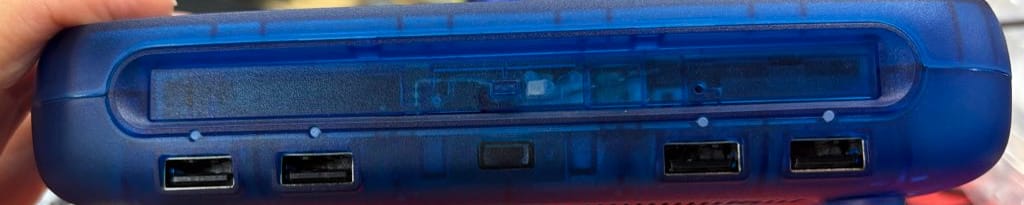
When Taki Udon was getting ready to announce the SuperStation and start taking pre-orders, the SuperDock — which can play games straight from a disc — wasn't part of the plan. We spoke about how the last-minute addition became one of the toughest engineering challenges for the SuperStation, in terms of both hardware and software. Here's that section of the interview, edited for clarity.
The dock feels like something new and different for FPGA, to me. The fact that you have this dock that's actually able to play PS1 discs and has other stuff attached to it. Walk me through your intentions with the dock and what it's taken to get it to the point it's working effectively.
Even just the December before the launch [in January 2025], it's just the SuperStation. There's no dock. And in my mind, if I did a dock, it'd just be to get more USB, because we only had three USB [ports]. And I maybe wanted to have an internal [solid state] drive. Then people were like 'we want a CD. We want a CD.' I'm thinking about it, and I'm thinking, 'it should definitely be able to read CDs.' CDs are not difficult at all.
But if you took the conventional wisdom at the time, people are like 'oh, there's no way you can read CDs on MiSTer, it's not going to work, every CD drive is a little different.' Blah blah blah. If those people worked for me and they were the ones I went to for advice, I would not do the SuperDock, because I would just think that it's impossible. But [they weren't].
So when we sold the SuperStation, I put the dock there for a $5 deposit, and it was a $5 deposit because it was not guaranteed. But if you give me this deposit, I will know if it's worth my time to try to make it work. Then a lot of people paid the $5 deposit, so I felt comfortable sinking an unknown amount of time trying to get it to work.
I hired a bunch of engineers to work on that and to work on the UI, which some people also said was impossible to do. The UI started first. I was like, 'it should not be impossible to do a UI on this. It's a computer!' I've released handhelds that are weaker than the processor that's in the MiSTer, and have a UI that's much better, with graphics and everything.
'It can't be done, it can't be done.' Well, we're naive enough to try, I guess. And then we did it.
Around the summer we finally got some proof of concepts of being able to read discs. Reading PS1 was possible. It works. Can Sega CD work? Yes it can — it's even easier than PlayStation 1. Performance is amazing. Can it do Sega Saturn? Yes, it's even better than PlayStation 1. Can it do PC CD? Yes! All of these things were way more performant in that early stage than PlayStation 1 was, so no matter what, the myth that it can't read CDs was just a myth.
It's a hobbyist project. When people are like 'oh, we want the UI to look good,' yeah, it's easy to say those things, but if you don't have an engineer that's going to actually spend the time to work on it, with no ROI at all, then they're not going to do it unless they're personally invested in it. And [so far] none of them are, because they like the way the UI looks.
But there's a majority of people who probably want the UI to be better, and they want to be able to access legacy media without having to buy consoles that are super expensive.
Once we had the dock CD working, we just needed to iterate. How can we make the experience better? How can we remove the friction from MiSTer? How can we make this integrated into our main UI? How can we give users an option to never need to use the MiSTer UI at all? How can we auto-boot into our UI? How can we recognize that discs have already been dumped, and should the user load it from the backed up storage because that'll be faster, or should they have the freedom of being able to still boot it from the CD?
Region free PS1 = ❤️
— Taki Udon (@TakiUdon_) January 4, 2026
Japanese PS1 games are super cheap. pic.twitter.com/r6sQ17Mw6r
We got it to the point that the hardware is fully proven. So the $5 deposit changed to the full price of the dock. We opened up the mold for the dock. If I had more money, a lot of things would've been going [into production] at the same time, but there's a lot of risk in this stuff. If I had opened the mold for the dock from the beginning like I did for the SuperStation, I would have to eat that entire dock cost if the dock couldn't work and I'd have to refund the $5 deposit.
A refund of the $5 deposit is not a big deal — that's $5 plus maybe 3% extra for refunding the original payment processing fee. But the mold, that's a lot. And paying for people to work on it in the office, that's a huge cost. There's no failure path forward. So we opened the mold for the dock, and it's [now] a month or two behind SuperStation.
What goes into changing a mold before production?
The mold [for SuperStation] has been modified a lot of times to accomodate changes that we've done to the motherboard, but since all of these things were mixing at the same time [throughout the design phase], it was easy. Now if I want to change something for the mold, it's not easy.
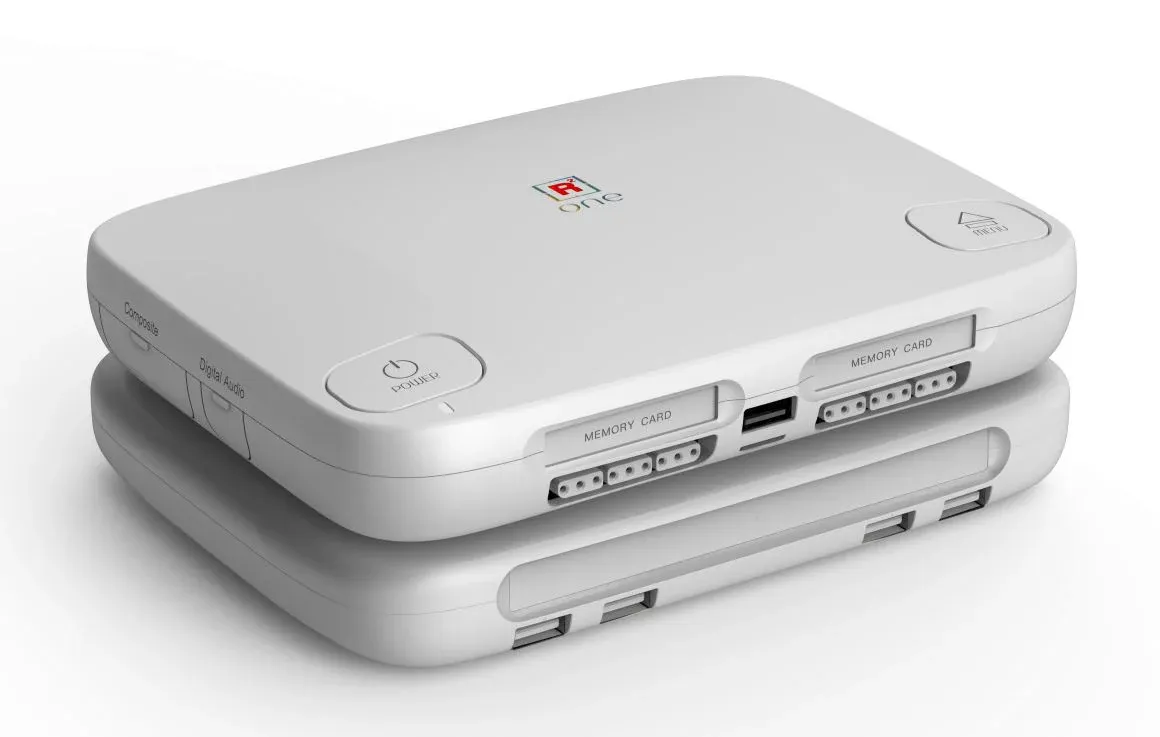
We have a new revision, which is 1.3. 1.3 has one change where the connector that goes to the dock is a board-to-board PCB connection. So when you have it on top of your motheboard, you just press it down like a Lego brick, and it's connected. Right now, on the ones that we are shipping, there's a flat panel cable that connects to the cartridge connector that we have that connects to the dock, and then the other end of that cable connects to the motherboard. So you always have to connect one cable to the motherboard and one to a secondary PCB, and that secondary PCB connects the motherboard to the SuperDock.
As of 1.3, you'll just take a secondary PCB and just put it into place by pushing down. It saves you a lot of steps, and I think it looks much better. But the problem with that is, that requires a mold change, because it doesn't fit fully flush with the connector. Even [three weeks ago] we were playing around with 'how can we make this fit without changing the mold?'
EDM https://t.co/6z10Oz15wx pic.twitter.com/zbl4X0iubb
— Taki Udon (@TakiUdon_) September 22, 2025
Changes from 1.2.1 to 1.23 were mostly internal, about how we improve the efficiency of assembly. Now, when you assemble the motherboard, you can just drop it right into the pocket that it sits in in the bottom shell. But for 1.2's motherboard, you had to tilt it back, so that the back ports are down and the front of the PCB is pointing up to your face, then you put that side in and the front goes down. Once you put it in there it's locked into place. You can't easily get it out.
That motion — I said 'well, if you multiply that by X amount of units, that's a lot of time.' It should really just be 'drop it in and screw it in.' And if the user needs to take it out, it should be easy for them. There's no reason we need to lock it down, so that's not a great design. So we had to modify the mold for the device, which is expensive.
2. A quick Quest 64 Recompiled follow-up
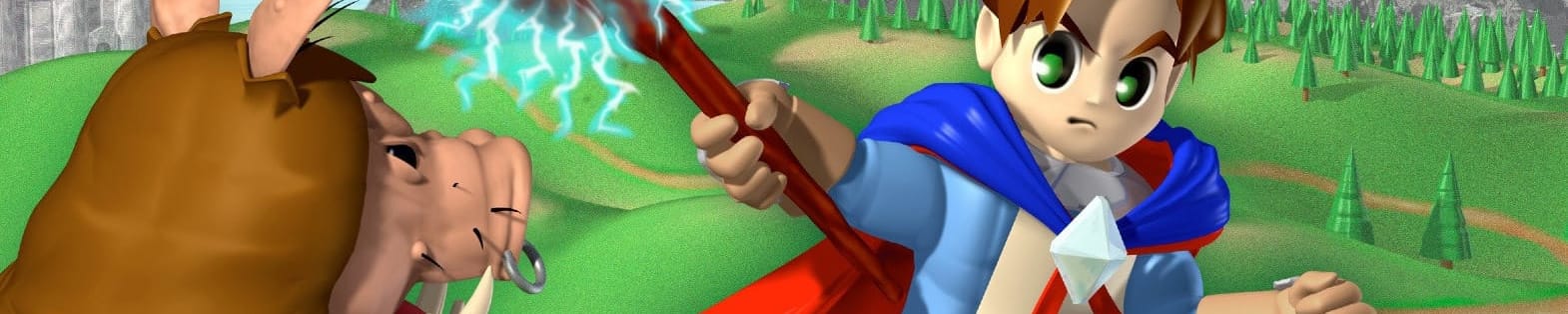
After featuring the WIP Quest 64 in ROM a couple issues back, I had a quick chat with developer Rain, who put v0.1 up on Github. "Currently, the port does not correctly support widescreen or higher refresh rates, however surprisingly they do mostly work out of the box. I would like to have the visual bugs completely fixed for both widescreen and higher refresh rates, fix the hackyness of the current controller pak support, and get mod support working before it's an official v1.0," Rain told me. The Github will also only build for Windows currently (Mac and Linux support to come).
Rain learned to code primarily to go glitch hunting in Paper Mario. "I only knew MIPS assembly and the scripting language of Paper Mario for awhile, but then two people from the ZeldaRET Discord started up a Paper Mario decomp, which I then contributed to in order to learn C," he said.
"From there I created my own decomp projects of Chameleon Twist 1 & 2, as well as Mario Parties 1-3. For Quest 64, Mallos (the original creator of the Quest 64 decomp project) was having issues with the build system in their decomp project so i offered to lend a hand which eventually lead to me contributing a bit to the project as well. Many years later, Wiseguy releases the N64 Recomp program and i was looking at games that I had contributed to decompilations for to try and recomp, and I came across Quest 64. Well I actually got it working in less than a day, but the N64ModernRuntime library didn't have controller pak support so you couldn't save. Sonicdcer who has also created a few recomps mentioned they had a fork that mostly worked for the controller pak, so I used that fork and with one other patch to the game, I had saving working."
Rain confirmed that he got the Japanese version of Quest 64, Eltale Monsters, working with N64 Recompiled as well, so that will eventually get a release, too. Rain also wants to release recomps of the Chameleon Twists and those N64 Mario Parties, though the latter require an addition to the N64 Recompiled process first.
"There's a lot of similar things for each recomp, but setting up the decomp project (which you need so you can generate an ELF the recomp can parse) and actually mapping out the code is its own specialized process for each game. So working on these recomps definitely helps, but there's always unique hurdles," he said. "I think we are going to write some kind of tutorial/general basis for getting one up and running soon, though I'm not sure how soon that will actually be." Other folks are welcome to contribute to the Quest 64 Recomp, too, if they're enthusiastic about seeing Brian's adventures fully polished up sooner rather than later.
Patching In

Citron "Pathfinder" refines Steam Deck UI, integrated mod downloads – This "significant milestone" release is truly packed with stuff. There's a new global save directory "making backup and migration significantly easier" and save files are compatible with other emulators. An integrated mod manager includes automatic installation of downloaded mods to correct directories" and has pride of place in the right-click context menu. You can save and share per-game configuration files to prove you have the best BotW settings. "Comprehensive restructuring of all UI elements for Steam Deck compatibility" includes an overhaul to the overlay and a bunch of bug fixes. There's a ton more to dig into in the update, too.
DuckStation gets fullscreen button swapping – The fullscreen UI in the PlayStation emulator now includes an option to swap your X/O concern/cancel buttons. Important!
Azahar backtracks on .3ds extension, allows it – "We previously made this change as a clear motion to distance ourselves from the mass piracy that lead to the closure of Yuzu and Citra, however, we have now determined that this change is causing more harm than good," say the developers. "Given that the removal of the .3ds extension was originally an act of project philosophy rather than a technical change, we don't want this decision to overshadow the very real leaps which have been made in Azahar over the last year. Because of this, we have decided that it's for the best of everyone that we revert the change."
Core Report

Analogue 3D v1.2.0 rolls out fixes – Analogue's N64 got a patch last week fixing some issues with HDMI CEC as well as the FPGA emulation itself. There's now support for the Switch Online N64 controller. It also got a few new library features, including tracking playtime and a "date added" label for games. A beta "force progressive output" option "removes interlacing and provides superior image quality over de-interlacing by delivering the full original image every frame. This modifies the video core to output the full framebuffer instead of the CRT interlaced image — a feature unavailable on the original system — while keeping video post-processing true to the original."
MAME 0.285 goes to the moon – The first MAME release of the year adds what I believe is the first emulation of Nichibutsu's Moon Raker, a 1980 shooter. There's a bit of history in this thread.
Translation Station

Chobits for PS2 goes English – There are (surprisingly?) only a couple Chobits games, and this one now has a 1.0, mostly complete translation! Except, womp womp, it's "predominately AI translated with manual edits." Slight frowny face to that fact. Some UI elements are also still in Japanese, but the videos have been subbed in English.
Tales of Phantasia: Cross Edition for PSP gets a comprehensive translation patch – Tales of Phantasia has long been available in English, first with the SNES fan translation and then with the official GBA release, but not this PSP version! There are also a bunch of tweaks in this patch, including a skit prompt, some balance changes, and quality of life changes like "Curio's Mirror and Scout Orb now carry over in New Game+ if you select the option to carry over items." I love the SNES version of Phantasia, but never played this version. Cool that every edition of the game is now playable in English.
WIP updates! Super Robot Wars 64, The Curse of Ogaeritō, and Moero! Justice Gakuen Translation Project:

billymonks just released the first iteration of their English translation patch of the "Nekketsu Nikki" mode in the Japanese version of Project Justice (Moero! Justice Gakuen) on the SEGA Dreamcast.https://t.co/dKh41iaezr pic.twitter.com/HkuH4xHSla
— Derek Pascarella (ateam) (@DerekPascarella) February 4, 2026
Good pixels

Let's close with some quick Bluesky posts. Click through for the pics!
📺 Final Fantasy IX // PlayStation // JVC AV-27D201 via component
— Aidan Moher (@aidanmoher.com) 2026-01-18T06:44:31.817Z
🕹️ Battle Unit 🎮 Sharp X68000 (via MiSTer) 📺 🟥🟩🟦 Commodore 1084 #️⃣ #ScanlineSunday
— Jeffrey Mays (@jeffreymays.bsky.social) 2026-02-02T03:24:42.683Z
Assault Suits Valken SNES 2-chip S-Video Sony KV-27V42 #ScanlineSunday
— Evan Arnett (@evanarnett.bsky.social) 2026-02-02T01:18:17.551Z
Here are a few others I took of the startup. (I'll give you guys a nice pixel-based game next time, I swear!)
— Chronis (@chronis.bsky.social) 2026-02-01T13:44:49.150Z
We have Samurai Shodown at home this #ScanlineSunday in Golden Axe: The Duel for Sega Saturn 🪓 Generations passed since Gillius Thunderhead defeated Death Adder by using the Golden Axe. Now his descendant is among the many warriors fighting each other to control the Golden Axe in this 2D Fighter
— Sick Combos (@sickcombos.bsky.social) 2026-01-19T02:58:22.243Z