
Hello again! We're back, and yet another fortnight has passed without me losing the last shreds of my sanity while trying to distinguish between the shoddily assembled AI rubbish piling up in every corner of this little hobby and the good stuff that I delight in sharing with you all. Check back in two weeks' time for another exciting update!
Oh, right: There's still a newsletter to do. Well despite being weighed down by said winnowing process, I've cobbled together some cool stuff for you, including a bit of insight into how someone found a secret hiding inside one of the best games ever made and a quick check-in on some of the emulation hardware we'll be playing our games on this time next year. It's not even Android stuff!
As is often the case, though, the best stuff may be down in the Translation Station, at least if you're a fan of Puyo Puyo or strange, Bionic Commando-adjacent PS2 action games (boy, am I!!). They're blessedly AI-free, and there are more people out there still fighting the good fight. Just wait for Mermanoid and Schrodinger no Neko from some crack teams!
How do I follow a trailer like that? Easy: I don't. On with the news!
The Big Two
1. F-Zero GX bares it all

When I started digging into the coolest news I've seen this month for today's issue of ROM, I assumed it must have involved emulation. Surely Dolphin's debugger had a hand in the find of the year, right??? By the time I realized it prooooobably didn't, actually, I thought ah screw it — it's close enough to an emulation story. Let's do it anyway!
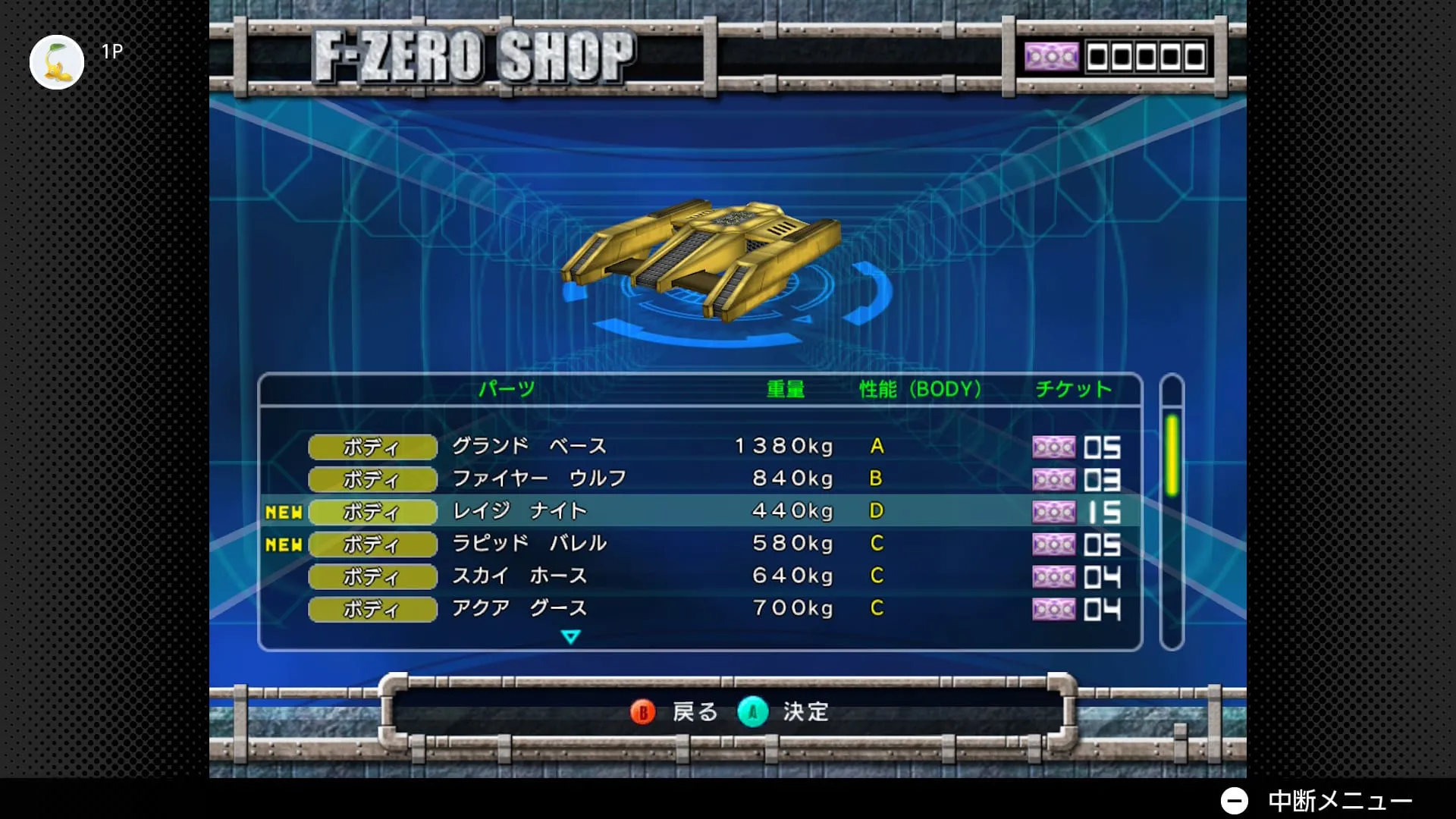
The news, if you missed it, is that a Japanese X user with the handle @BTEST4HE popped up with a previously undiscovered slew of codes for Sega's racing masterpiece F-Zero GX that unlock all the stuff, including stuff from the arcade counterpart that for years has been thought to be inaccessible in this version of the game. A recap here:
 Brian
Brian
"The codes unlock all content, including Japan-only arcade event exclusives, AX courses and machines, Dark Schneider, and the Gold Parts. Players still need in-game tickets to purchase the content once unlocked, but the codes allow you to bypass the need to beat the game on Master difficulty in Grand Prix mode and in Story mode on Very Hard.
It’s also worth mentioning that the Gold Parts were originally special sets given away to the winners of Japan-only in-person events during the original release on GameCube. Now, however, other fans can get their hands on them as well."
What really caught my eye about these codes, other than the novelty of a beloved game having a new secret uncovered decades later, is that most of them have to be input on four controllers simultaneously. Clearly no one was ever going to stumble upon them accidentally.
So how did @BTEST4HE find them?
I couldn't ask them directly, so I asked someone who knows a thing or two about finding game codes: Bo Bayles, whose Rings of Saturn blog is largely devoted to this very process.
"I'm kicking myself, because last year somebody asked me to look into this store kiosk disc that had F-Zero GX content on it," he says. "I figured out what how that worked, and started looking at the main game. But then I saw how much was in the TCRF article already and figured it would be duplicative."
Paradoxically, F-Zero GX was so well-explored that he never bothered to scrutinize it for hidden cheat codes. Maybe nobody else did, either, until @BTEST4HE. But here's how Bayles describes the process in general:
- Figuring out where the target game stores input in its memory
- Loading the game binary (or a snapshot of its memory) into Ghidra
- Using Ghidra to trace references to the input memory addresses
- Filtering out all of the boring things like menu navigation and player movement
@BTEST4HE has a GitHub page set up with a custom pairing of reverse-engineering tool Ghidra and AI agent Claude. That discovery bummed me out a bit, considering it coincided with the news that the maintainer of Decomp.dev has decided to shut down the site due to AI's impact on the decompilation scene. Given the language barrier, I don't want to assume too much about how @BTEST4HE did this work. But just because the codes are long, and require being input on four controllers at once, doesn't necessarily mean they needed the brute force power of an AI to uncover.
"With Ghidra you can just read out what the button combinations are. Most games for a particular system represent buttons the same way. So if you know address X holds controller input, and that value 1 represents D-pad Up, then you know that the game is checking for up if it reads address X and compares it to 1," Bayles said. "The thing Ghidra can't do is tell you where to put in the code. So a lot of times I'll find something in 5 minutes and then spend hours trying to figure out what the right screen is."
It's a domain AI has proven very effective in, and when it comes to a game like F-Zero GX, just having the code will mean a lot to a lot of people. But in general, it's what he can learn through the process that drives Bayles:
"The AI tools are very good about understanding decompiled code like you would see in Ghidra, so I will not be at all surprised if cheat code discoveries start happening left and right like decompilation projects. I have a long backlog of things to write up, and several that will probably be scooped.
My goal isn't to have the most comprehensive cheat code archive. It's to understand how a game works and then try to communicate that clearly in a blog. So if Claude or Gemini just said 'put in this button sequence here," that wouldn't be all that interesting to me. I find a lot of really vanilla cheat codes that might be interesting to fans of the game, but are totally standard in terms of how they're implemented. I don't usually write those up, but I might put them on Twitter or Bluesky. For example, this Red Zone code I posted today has a neat effect — a little demoscene thing that the programmer made. But finding it was totally boring — it's the same cheat code detection function you'd find in 1000 other games. Contrast that with Stormlord, which is interesting not only because it's a real live nude code, but also the programmer did something unique to implement it."
@BTEST4HE has a website, but unfortunately hasn't written anything about the discovery process for F-Zero's golden ticket just yet. Hopefully they will. Because in the long run, that's the information that's really valuable — it's what has a chance to inform or inspire others to make discoveries of their own, and will contribute to the collective understanding of a game that's living proof there's always more to learn.
To bring this all back 'round to emulation, though, if you're going to try the codes out for yourself in Dolphin, make life easier on yourself by going into the controller configuration settings and mapping all four gamepads to the same inputs. That's a whole lot easier than growing six extra arms, I'll tell you what.
2. The next wave of FPGA is open
Now that the SuperStation One is bedded in, the MiSTer FPGA scene has a healthy range of options, from build-it-yourself boards to prebuilt easy street. And the MiSTer isn't the only FPGA game in town. There's ModRetro (and that's all we're going to say about them) as well as Analogue, which just announced a pair of refreshed FPGA consoles: the Mega Sg+ and the Super Nt+.
Unlike the 4K-focused Analogue 3D, these two consoles are still built for 1080p, but they have a few new features, including built-in Bluetooth alongside 2.4G wireless support, USB-C power, an "evolved OS" and a USB-A port for "more convenient DAC support."
At $220, they're a touch cheaper than the SuperStation One, and certainly more convenient for playing games straight from the cart. But they're also single-purpose devices at a time when the FPGA scene is becoming more open and more accessible every month. The MiSTer's frontends are getting better, too.
More exciting, though, is the new hardware that's on the way without Analogue's limitations.
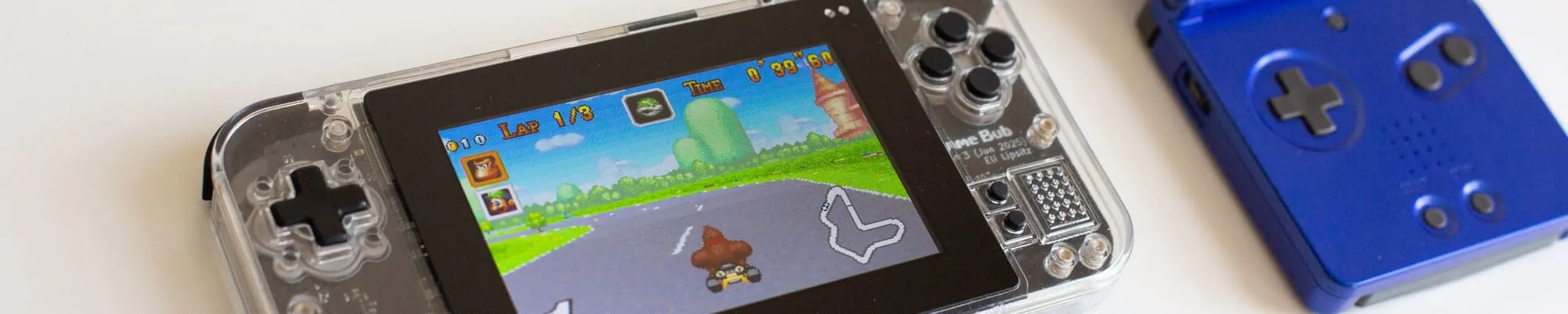
First up: the Game Bub, "an open-source FPGA retro emulation handheld, with support for Game Boy, Game Boy Color, and Game Boy Advance games."


While not a MiSTer device explicitly — its memory will be a limiting factor for cores like the PS1 and Saturn — the big selling point is that it can run games from cartridges like the Analogue Pocket and is "fully open source and fully hackable, so you can use it as a portable, self-contained AMD Artix 7 FPGA development platform." The handheld's crowdfunding page promises "Game Bub is not locked down in any way: custom software gets unrestricted access to all on-board hardware."
Quite a few MiSTer cores have already been ported over to work on the Game Bub, including the NES, SNES, Neo Geo Pocket, Colecovision and Atari 2600.
Meanwhile, Taki Udon is gunning for both the Super Nintendo and Game Boy Advance SP form factors. First up: codename SuperStation Pocket, with hardware that will run a stripped-down version of the Console Mode UI, so it will at the very least be MiSTer adjacent.
New progress on FPGBA SP UI, cartridge loading performance, and scaling options.
— Taki Udon (@takiudon.bsky.social) 2026-10-17T16:56:14.514Z
Taki's been aiming for this one to cost around $100, which may prove untenable with the delirious cost of components now. But it's clearly aiming to be a lower-powered device than his SuperStation NT, which will, at some point, apparently have a Genesis-shaped sister.
It’s time to run it back. Codename SSNT/SuperFPGA
— Taki Udon (@takiudon.bsky.social) 2026-10-08T05:53:34.171Z
Like Analogue's system, this one will run carts. Unlike Analogue's system, it will presumably also run every MiSTer core under the sun. "Our SNES and Mega Drive FPGA consoles are 4K and well under $200. That is all," Taki tweeted in a blatant shots fired post after the refreshed Analogue systems were announced.
Meanwhile, the MiSTer Multisystem crew are tackling a jumbo-sized handheld of their own:
The MiSTer scene may still be divided over AI slop cores, a situation that likely won't be changing anytime soon, but the hardware scene is powering ahead and doing cool stuff regardless.
Patching In

Azahar's next release gets fast on the slow stuff – Build 2127, now in alpha, will help the 3DS emulator significantly in "JIT-less environments," enabling "greatly improved performance on iOS and tvOS devices, allowing devices as old as the iPhone XS to play games, even with playback speeds of over 200%." They've also fixed a missing echo sound effect and "greatly improved texture handling performance" for a bunch of games.
RPCS3 does me a solid, fixes 3D Dot Game Heroes crashes – Damn, it wasn't but a few months ago that I was trying out 3D Dot Game Heroes, one of those I always wanted to play that but never got around to it games. I played maybe an hour, and it didn't go too smoothly. Now I know why courtesy of developer Yahfz: "In 3D Dot Game Heroes, the PPU can wake up and free a SPURS task context before the SPU finishes saving it. That late save corrupts the heap and the next malloc crashes." This fix closes a issue thread on the RPCS3 Discord dating back to 2018. Yahfz notes you'll need to adjust the PPU Event Wake-up Delay setting under the advanced tab depending on CPU speed, but with 25us being the tentative go-to setting. Keep an eye on the wiki page for more advice, though.
Vita3K improves pausing (and unpausing) – Fairly important actions for any piece of software, and the Vita emulator does them better now. This fix stops it from accidentally running during a pause or crashing on resume. Other recent updates include a graphical fix for FSR running on Vulkan and an overlay for the newly improved pause screen that lets you exit the emulator.
Core Report

The MiSTer has an FM Towns Marty core, now – Unlike the absolute tidal wave of MAME-to-MiSTer arcade ports in recent months, this new core comes from longtime MiSTer contributor Kitrinx, who notes that it "Plays the entire library, though some of the games made for pentiums or DX4 will not run very fast." There's save state support and a database for saving per-game configs for convenience.
Also, if you're hardline against AI, I'm afraid this core isn't for you — there's clearly a divide in the MiSTer community between the vibecoders and the seasoned devs like Kitrinx who insist you should know how the codebase works before touching it and don't hold back their criticisms of the former group in the MiSTer Discord. But many (if not all) are still using tools like Claude to write code. I don't doubt they're doing much better work, but that work does indeed still involve AI now.
Zaparoo Frontend gets a 2.0 rework – I just barely missed this update last issue, but the first of two UIs to arrive for the MiSTer has gotten a bit performance-focused overhaul. Since early October it's gotten a couple updates: "You can search your whole library from the couch and keep a search as a tile on the Hub," smoother CRT performance by matching the screen draw to the screen refresh, and better support for multi-disc games. The companion Zaparoo app for mobile also got an update, and it looks pretty snazzy.
Killer Instinct approaches – The MiSTer Killer Instinct (1 and 2) core debuted as a test build back in August, and it seems to be closing in on a release; developer kconger is still working on slowdown, and last month even put out a call in the MiSTer Discord: "Anyone [who] has the ability or knows of someone who can run a custom boot ROM on their Killer Instinct 1 or 2 board, please message me."
Translation Station

A boxful of Puyo Puyo – Maud of Hoshi Hoshi Wo Miru Hito and Waku Waku Puyo Puyo Dungeon fame is back with another romhack from the Puyo family, this one a collection for the PS1! It includes the first two Genesis games, with one script ported in from a prior 2025 fan translation by RadioTails and a fresh one for the sequel; Maud also translated the rest of the material in Box, which includes an RPG mode, a "mishmash" mode, and the "Puyommunication" PocketStation feature. Not a drop of AI was used in hacking or translation. Way to go Maud!
'Cult classic' PS2 RPG ChainDive celebrates 23 years with a patch – "By hand, of course," project lead Gally responded when asked if this was a human translation or a machine-generated one. I know nothing about ChainDive, but judging by the trailer it sure looks Bionic Commando-y! To HG101 we go: "Despite being a 3D game, all of the action takes place along a 2D axis... All throughout the stages are little green orbs that act as grappling points. ... You are equipped with a sword, although this does not directly harm enemies. Instead, it freezes them, which then turns them into grappling points you can latch onto. You can then swing around and pummel them until they shatter. Destroying multiple enemies in quick succession will build up a combo – high combos will restore a portion of your life meter based on your performance.
"The development team, Alvion, went on to develop Malicious for the PlayStation 3 and Vita, which is also worth checking out. They also aided PlatinumGames with other fast-paced action titles, like the Bayonetta series and Metal Gear Rising: Revengeance. The cool funky electronica soundtrack was composed by Yuji Takenouchi, who hails from the old school Konami sound team, having worked on Metal Gear 2."
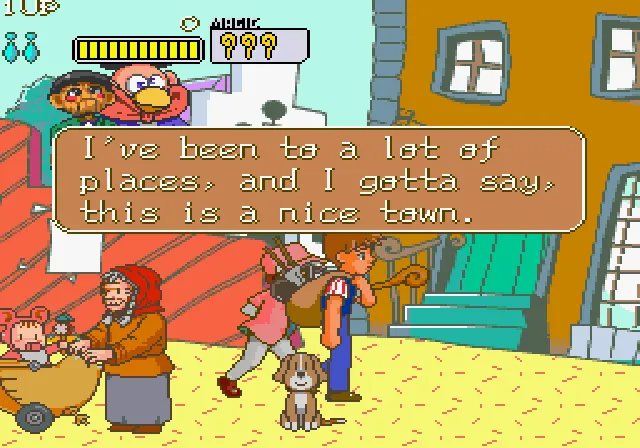
Pu-Li-Ru-La-Yay – Sega hacker extraordinare Derek Pascarella is back with another project alongside translators DaVince21 and Walnut and playtester hasnopants, this one something a bit different: a beat-em-up for the FM Towns Marty! "Originally unleashed on arcades by Taito in 1991 and brought home to the FM Towns by VING in 1994, Pu-Li-Ru-La is one of the most delightfully bizarre games ever made," he writes. "Bop an enemy and it turns back into a fleeing animal. Wander into crystal mountains, dream-warped towns, and scorched deserts. Face down foes that only get stranger with every stage. It's a psychedelic picture book come to life, and now it can finally be enjoyed in English on the FM Towns."
Good pixels

Something a little different this week: Enjoy this archive of all the official wallpapers for F-Zero GX and AX. 💽